
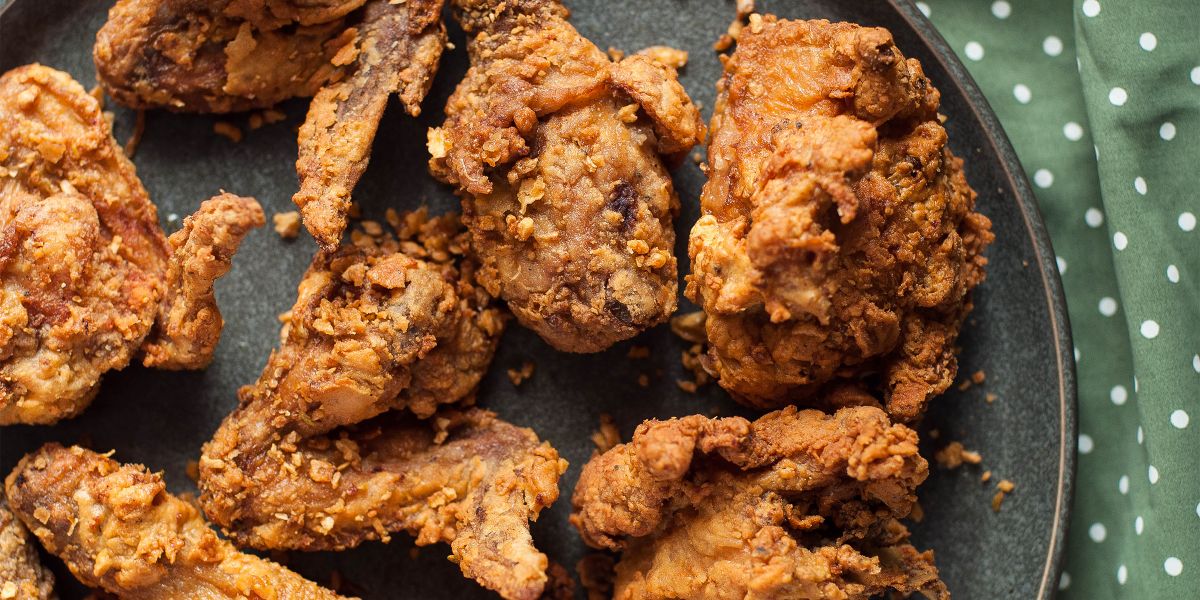
A plate of chicken. | Source: Getty Images
Chicken Recalled in Seven U.S. States Due to Possible Contamination – Details

Jan 19, 202607:56 A.M.
The type of possible contamination can be very serious for pregnant women, people over the age of 65, and those with weakened immune systems, according to Mayo Clinic, which has listed symptoms.
Advertisement
It started with a routine test... and ended in a nationwide alert. On January 16, 2026, the U.S. Department of Agriculture's Food Safety and Inspection Service (FSIS) announced a product recall by a food processing company. According to the information, which includes lot codes, the items were produced on October 14, 2025.

A close-up photo of grilled chicken on a plate in Lafayette, California on June 16, 2024. | Source: Getty Images
Grilled Chicken Crisis: 13,000+ Pounds Pulled from Distribution After Listeria Detection
Suzanna's Kitchen is the food production company, based in Norcross, Georgia, behind the recall of approximately 13,720 pounds of a fully cooked grilled chicken product due to potential contamination with Listeria monocytogenes (Lm).
Advertisement
The affected product is labeled under the Fit Foodz brand and is packaged as "Grilled Chicken Breast Fillet with Rib Meat." The recalled items are packed in ten-pound cases, each containing two five-pound bags. Both the case and the inner packaging are marked with the lot code 60104 P1382 287 5 J14, and display the USDA inspection mark with establishment number P-1382.
Advertisement
Silent Threat: Contaminated Chicken Was Destined for Seven States
These products were transported to distribution centers for foodservice sales — rather than directly to retailers — in seven states: Alabama, Florida, Georgia, Missouri, New Hampshire, North Carolina, and Ohio. The issue was discovered after a third-party laboratory test returned a positive result for Lm in a sample of the ready-to-eat chicken fillets.
While there have been no confirmed illnesses linked to the product as of now, Listeria can pose serious health risks. Consumers who are concerned about potential symptoms are urged to seek medical attention.
Advertisement
Company Issues Direct Contact for Concerned Consumers
Those with questions regarding the recall may contact Dawn Duncan, Customer Service Director at Suzanna's Kitchen, via email at dduncan@suzannaskitchen.com. For media inquiries, Craig Pate, Chief Financial Officer, is available at cpate@suzannaskitchen.com.
Additionally, general food safety questions can be directed to the USDA Meat and Poultry Hotline at 888-MPHotline (888-674-6854) or via email at MPHotline@usda.gov. Consumers can also report concerns 24/7 through the USDA's Electronic Consumer Complaint Monitoring System at foodcomplaint.fsis.usda.gov.
Advertisement
A Company Built on Trust
The recall stands in sharp contrast to the values long upheld by Suzanna's Kitchen, a company that has built its name on quality and integrity for more than 60 years. What began as a small family operation has grown into a nationally recognized food producer, one that prides itself on combining tradition with innovation.
With a deep-rooted legacy in delivering trustworthy meals, the company describes its journey as a "tapestry of milestones," each one reflecting an ability to adapt and thrive in an ever-evolving industry. Suzanna's Kitchen operates with a mission that reaches beyond the plate.

Apricot-glazed grilled chicken; photo taken in Washington, D.C., on May 6, 2024. | Source: Getty Images
Advertisement
The company is committed to delivering more than just food; it promises peace of mind. This philosophy is backed by meticulous attention to detail, from ingredient sourcing to state-of-the-art production processes.
Their operational capabilities include high-volume meat and poultry processing, high-pressure pathogen-reduction technology, and tailored packaging and logistics, all designed to uphold the highest safety and quality standards.

Grilled chicken pieces sitting on a plate at Casa Teresa Restaurant in Washington, D.C., on December 21, 2023. | Source: Getty Images
Suzanna's Kitchen also boasts a suite of industry certifications, including SQF Level III, Seafood HACCP, Gluten-Free, Organic, and Halal, underscoring its dedication to meeting the diverse dietary and regulatory needs of its customers.
Advertisement
A strong emphasis on sustainability and ethical practices runs parallel to its technical precision, with initiatives aimed at waste reduction, energy efficiency, and responsible sourcing. Additionally, in 2017, the company introduced an Employee Stock Ownership Program (ESOP), a bold move that transformed every team member into a co-owner.

A whole cooked chicken with sides and garnishes; photo taken in 2021. | Source: Getty Images
This initiative has helped cultivate a workplace culture built on accountability, pride, and collective success. Suzanna's Kitchen positions itself not just as a brand but as a community-driven organization where trust, reliability, and innovation go hand in hand.
Advertisement
The Invisible Killer: Why Listeria Is So Dangerous
While Suzanna's Kitchen has long upheld a commitment to safety and quality, the detection of Listeria monocytogenes in one of its products brings attention to a pathogen that can have serious health implications, particularly for vulnerable groups.

Grilled chicken thighs and a salad photographed for a food outlet; photo taken in Washington, D.C. on June 17, 2024. | Source: Getty Images
Commonly referred to as listeriosis, listeria infection is caused by bacteria that can contaminate a variety of foods, including deli meats, soft cheeses, unpasteurized dairy products, and processed meats. According to the Mayo Clinic, the infection poses the greatest risk to pregnant individuals, adults over the age of 65, and people with weakened immune systems.
Advertisement
While healthy individuals may experience only mild symptoms or none at all, those in higher-risk categories can suffer from severe complications, and in some cases, the illness can prove fatal.
Initial symptoms can appear within one day to two months after consuming tainted food, depending on how the bacteria affect the body. Early signs include diarrhea, vomiting, and stomach discomfort, but if the infection spreads to the bloodstream or central nervous system, more alarming symptoms may follow.
Advertisement
These include fever and chills, muscle aches, headache, stiff neck, confusion, loss of balance, and, in severe cases, seizures. For pregnant individuals, listeriosis may only cause mild, flu-like symptoms, but it can have devastating consequences for the unborn child, including death or a potentially life-threatening infection shortly after birth.


Advertisement
Newborns with listeria may appear lethargic, cranky, have difficulty feeding, or display irregular body temperatures and low birth weight.
The Mayo Clinic urges those who have consumed a recalled product or suspect exposure to contaminated foods to monitor for symptoms and consult a healthcare provider if signs of illness, including muscle aches, a fever, loose stools, or an upset stomach, occur.
Advertisement
Immediate/emergency medical attention is recommended for those experiencing a high fever, severe headache, stiff neck, confusion, and pain or discomfort due to light, as these may indicate bacterial meningitis, a rare but life-threatening complication of listeria infection.
As the investigation into the contamination unfolds, the incident serves as a sobering reminder of the importance of food safety and vigilance, both for producers and consumers alike.
Advertisement
Advertisement

The information in this article is not intended or implied to be a substitute for professional medical advice, diagnosis or treatment. All content, including text, and images contained on news.AmoMama.com, or available through news.AmoMama.com is for general information purposes only. news.AmoMama.com does not take responsibility for any action taken as a result of reading this article. Before undertaking any course of treatment please consult with your healthcare provider.