
Donald Trump Reveals He Already Has Someone in Mind to Fill Lindsey Graham's Senate Seat — But Won't Say Who
July 13, 2026



By the time the events at the late senator's Washington home began drawing attention, the most revealing part of the story had already happened in private. It involved one final commitment, a warning he chose not to act on immediately, and words that would soon carry a devastating new meaning.
In the hours before Lindsey Graham's sudden passing, the senator reportedly received a warning that might have changed the course of his final night. What he said in response would become painfully significant only several hours later.
But before returning to that final conversation and the striking scene that later unfolded outside his Washington, D.C., home, it is worth looking back at who Graham was, the family that shaped him, and the whirlwind of political activity that filled his last days.

Seated before the Senate Appropriations Committee, Lindsey Graham listens intently before speaking during a budget hearing, focusing on federal spending priorities as lawmakers review the administration's funding request. | Source: Getty Images
According to Graham's official Senate biography, the South Carolina Republican was elected to the U.S. Senate in 2002 after serving in the House of Representatives.
He became known as an outspoken national security advocate, a frequent visitor to American troops overseas, and a politician who could sometimes negotiate with colleagues across the aisle.
Before entering Congress, Graham served as an Air Force lawyer. He retired from the Air Force Reserve in 2015 at the rank of colonel after 33 years in uniform. Away from Washington's cameras, his life had been shaped by an enormous family responsibility.

Standing before a cluster of microphones, Lindsey Graham addresses reporters after a national television appearance. The confident exchange hints at the media presence that would become a defining part of his long political career. | Source: Getty Images
Graham lost both parents while he was in his early 20s and became the legal guardian of his younger sister, Darline Graham Nordone. A profile on Graham's private life reported that the then-21-year-old college student helped raise his then-13-year-old sister while completing his education.
Graham never married and had no children. He once said, "I never found time to meet the right girl," adding that "the right girl was smart enough not to have time" for him.
He is survived by Nordone and her family, which includes his nieces and nephews. Behind the image of the powerful senator was an older brother who had effectively become a parent almost overnight.

With his right hand raised, Lindsey Graham takes the oath of office during a ceremonial swearing-in on Capitol Hill, marking the beginning of a new chapter in the Senate. The moment signaled his transition from the House of Representatives to a role that would shape the rest of his political career. | Source: Getty Images
That devotion to duty and family offers important context for what reportedly happened next. Even as his body appeared to be warning him to stop, Graham seemingly remained focused on the unfinished work waiting for him in Washington.
According to an account of Graham's final hours, he spoke with President Donald Trump by telephone on Saturday night, July 11, 2026. During their conversation, Graham briefed Trump about his recent trip to Ukraine and a Russia sanctions bill he wanted the Senate to consider soon.
Trump reportedly told the senator that he was preparing to launch fresh strikes against Iran following another attack on commercial vessels in the Strait of Hormuz.
It was yet another high-stakes discussion for Graham, who remained deeply involved in foreign-policy matters until the end of his life.
Shortly after the call, however, the focus reportedly shifted from international affairs to Graham's own health.
A person who spoke with the senator afterward said Graham complained that he was feeling unwell. The individual urged him to seek medical attention immediately, but Graham reportedly declined to do so that night.
Instead, he said he would obtain medical help on Sunday morning — after his scheduled appearance on NBC's "Meet the Press." His decision suggested that, even while feeling ill, he remained determined to fulfill one more professional commitment.
Then came the comment that would take on a heartbreaking meaning within hours. Graham reportedly joked, "I can't die now." He explained that he still needed to handle the Russia sanctions effort, help resolve the situation involving Iran, and pursue normalization between Israel and Saudi Arabia.
What may have sounded like dark humor at the time soon became a haunting summary of everything he still believed he had left to accomplish. Several hours later, Graham passed away.
The deeply personal details of Graham's final hours were followed by another development that attracted attention: the presence of federal personnel at his Capitol Hill residence. According to reporting about the activity outside Graham's home, at least six men and two women wearing FBI gear were observed at the senator's row house in Washington, D.C.
Footage recorded by Nexstar's Vinay Simlot shows a man wearing a U.S. Marshals Service jacket leaving the residence. An FBI agent then entered the home. Later, two more agents wearing blue-and-yellow FBI windbreakers were seen going inside.

Federal personnel visited Lindsey Graham's Capitol Hill residence following the senator's death, though officials did not immediately explain the purpose of their presence. The unusual development added another layer of intrigue to the final-hours timeline. | Source: YouTube/@NBCNews
Other personnel continued moving in and out of the residence as a man in an FBI jacket stood watch near a large black container.
At one point, another person wearing bureau gear retrieved a manila folder from that container. The video showing federal personnel at the property added a striking visual element to an already extraordinary series of events. Authorities have said there is no evidence of foul play in Graham's death.
Yet the most lasting detail may not be the unusual activity outside his residence. It is the painfully human moment that came beforehand: a man who felt unwell, delayed seeking immediate help because he intended to honor one more television appearance, and joked that he simply had too much unfinished work to leave behind.
"I can't die now" was apparently delivered as a joke. Hours later, it became Graham's poignant final reflection on the missions he believed were not yet complete.

Graham remained deeply involved in high-stakes foreign policy during his final days, including discussions involving Ukraine, Iran, and Middle East diplomacy. His determination to keep working despite feeling unwell would later give his last reported remark a haunting significance. | Source: Getty Images
To understand how Lindsey Graham reached that consequential final evening — from his trip to Ukraine and last conversation with Trump to the emergency call and the hours surrounding his death — the complete timeline offers an even closer look at the senator's rapidly unfolding final days.
Only one day before the medical emergency, Graham was thousands of miles from Washington on July 10, 2026. Ukrainian President Volodymyr Zelenskyy shared footage from their meeting in Kyiv, showing Graham greeting him warmly and shaking his hand inside an ornate government room.
Zelenskyy described the visit as Graham's 10th trip to Ukraine, thanking the senator and the United States for continuing to support the country.

Lindsey Graham's final overseas trip came just one day before his sudden death in Washington, D.C. The Ukraine visit was his 10th, underscoring how central foreign policy remained to his work until the very end. | Source: X/@ZelenskyyUa
The Ukrainian president said Graham had briefed him on work underway in Congress and that the pair discussed Ukraine's air-defense needs. Zelenskyy also said agreements concerning the production of Patriot systems in Ukraine needed to be implemented.
At that moment, nothing in the footage suggested the grim events that would unfold after Graham returned to the United States. He looked engaged in conversation, standing face-to-face with Zelenskyy and continuing the kind of foreign-policy work that had defined much of his Senate career.
Later on July 10, Graham published what would become his last post on X. In the final message, the senator celebrated continued investment at Coast Guard Base Charleston.
"Great news to see the continued investment in Coast Guard Base Charleston!" he wrote. Graham said that, as chairman of the Senate Budget Committee, he had helped secure funding for the Coast Guard as part of the One Big Beautiful Bill.
The post highlighted a $230 million design-build contract for new operational support facilities at the base. It was an ordinary message about infrastructure and federal funding — with no hint that it would be his last public update.
After returning from Ukraine, Graham called U.S. President Donald Trump on Saturday evening, July 11. Trump later told NBC News about their last conversation, revealing that Graham appeared normal apart from one seemingly understandable complaint. "Other than being tired, he was fine," Trump said.
Graham had just completed the lengthy journey back from Ukraine. According to Trump, the senator specifically acknowledged his exhaustion during their discussion. "He actually said he was tired, but he wanted to pass the SAVE America Act," Trump recalled.
Trump said Graham remained focused on the proposed election legislation and was pushing for its passage. The president remembered telling him, "We're going to get it done, Lindsey. We're going to get it done. I'll see you, like, soon."
They reportedly believed they might see one another the following day. Graham had also been scheduled to appear on NBC's "Meet the Press" that Sunday, July 12, to discuss his journey to Ukraine. Instead, the program would become one of the places where Trump publicly reflected on his friend's final hours.
The president described Graham as "like a member of the family to me." Their close relationship had grown from an especially rocky beginning.
Graham had once been one of Trump's sharpest Republican critics, while both men competed during the 2016 presidential campaign. He later became one of the president's most recognizable allies in the Senate.
Trump remembered Graham as a gifted political operator who could resolve problems with Democrats when others could not. "If I had a problem with a Democrat, he could work it out," Trump said. "He was a great, he was a great politician, actually."
Yet Trump also described him as a "tough cookie" who could become exceptionally determined when he believed he was right.

Graham and Trump's alliance grew from a bitter 2016 rivalry into one of Washington's most closely watched political friendships. In their final phone call, Graham reportedly sounded well apart from being tired after his Ukraine trip. | Source: Getty Images
Their final call reportedly included Graham's description of his overseas visit. In a separate CNN interview about the conversation, Trump said the senator told him he had experienced "a great trip."
"He was telling me about the trip," Trump recalled, adding that Graham was "full of vim and vigour." Graham explained his fatigue by saying, "I'm tired because it's a long trip."
It sounded like the exhaustion of a 71-year-old man who had just completed an international journey. Only minutes later, however, the situation at his home reportedly changed dramatically.

Graham's relationship with Trump evolved from fierce rivalry to a powerful political alliance. Their final conversation focused on his Ukraine trip and unfinished legislative priorities. | Source: Getty Images
Trump said Graham called him at approximately 6:30 p.m. "He called me, I guess, just moments before, because he called me at 6:30 or something," the president said. "The medical people got there a little bit later, right after that."
That timing became one of the most haunting details surrounding Graham's final night. The senator had apparently been discussing legislation, recounting his trip, and making plans for the immediate future. Nothing in the conversation alerted Trump to an impending emergency.
Trump said he learned of Graham's death hours later. Because Graham had sounded fine during the call, the president concluded that whatever happened must have happened very quickly.
"It had to be something very quick because he was fine," Trump said. "Other than being tired, he was fine." Speaking about the suddenness of Graham's death, Trump offered a blunt but emotional reflection. He described it as a "quick end, and maybe that's not the worst way to go."

Graham spent decades at the center of some of Washington's most consequential battles. His sudden death left colleagues reflecting on both his combative style and his ability to work across party lines. | Source: Getty Images
The evening's quiet political conversations were followed by an alarming emergency call. According to The Washington Post's account of the response, emergency medical services received a call at approximately 8:30 p.m. on Saturday concerning someone experiencing chest pain at Graham's Capitol Hill residence.
Responders rushed toward the property. However, the information they had received about getting inside reportedly did not match what they found when they arrived.
Emergency radio traffic indicated that dispatchers initially told responding units the front door was unlocked. Once first responders reached the house, however, they reportedly discovered that the door was locked, and no one inside appeared to answer them.
The EMS dispatch audio revealed that responders then requested officers from the Metropolitan Police Department to help them force their way into the property. It was a tense and potentially crucial complication: emergency crews had been sent to deal with a possible cardiac arrest, yet they could not immediately reach the person inside.
The audio did not identify Graham by name. It also offered few details about precisely what responders encountered once entry was made. Still, the sequence painted an unsettling picture — a call reporting a severe medical emergency, responders expecting an unlocked entrance and the door instead preventing immediate access.
Roughly 20 to 25 minutes after the initial call, emergency personnel reported that CPR was in progress. The patient was described over the radio as a man in cardiac arrest. Crews worked to stabilize him before preparing to transport him from the house.
The timing means that Graham's upbeat political conversation with Trump had taken place only a relatively short time before the frantic lifesaving effort. One moment, he was discussing Ukraine and legislation; the next known chapter involved emergency personnel fighting to keep him alive.
Additional radio traffic reportedly indicated that authorities regarded the incident as a "Capitol Police matter only." That description did not by itself suggest anything suspicious. It reflected the involvement expected when an emergency concerns a sitting United States senator.
While responders worked inside, residents noticed an extraordinary level of activity outside Graham's home. "There were a couple of fire trucks, an ambulance, police, a bunch of people at the house," one neighbor told CNN in its report from Graham's Capitol Hill street.
The neighbor, who did not provide a name, said first responders eventually brought someone out on a gurney and left. Another witness, Florida resident Jerrett Wilson, was staying at a nearby Airbnb. He said he and others returned at around 9:30 p.m. and found the street shut down.
"We were actually standing out here when they were rolling the gurney out and putting him in the ambulance," Wilson recalled. At the time, Wilson said he did not realize the patient was Graham. He described the responders as "basically, taking their time loading him."
Neighbor Aaron Gulbransen, who stated that he had lived a few doors down from the late senator for less than four months, said he did not learn that Graham had died until Sunday morning, July 12. "Obviously it's a very sad day," he said. "I've always had great admiration for Sen. Graham."
Gulbransen remembered Graham as friendly whenever they crossed paths. "He was always very nice. Very friendly, very nice, he waved, said hello," he recalled.
Other neighbors described Graham as private and frequently away from Washington. One called him "a quiet guy who was hardly ever here," while another said he was "very careful about his privacy."

Lindsey Graham strides through the Capitol on his way to a Senate vote, moving with purpose as lawmakers prepare to debate major Republican legislative priorities. | Source: Getty Images
At approximately 9:30 p.m., witnesses saw a man being wheeled from the residence and placed into an ambulance. Photos published by TMZ showed Graham being transported from his home while surrounded by emergency medical personnel.
The outlet reported that paramedics were administering medical assistance as they moved him. The images appeared to show that Graham had been intubated and captured the devastating final stage of the response outside the home.
Medical privacy rules prevented D.C. Fire and EMS officials from releasing detailed information about the treatment provided during the journey to the hospital. Graham was transported to George Washington University Hospital.
Officials later confirmed that Graham was pronounced dead at 10:23 p.m. on Saturday, July 11. His office announced that the senator had died following what it called a "brief and sudden" illness.
"On the evening of Saturday, July 11, U.S. Senator Lindsey Graham passed away from a brief and sudden illness," the statement read. "Senator Graham's family appreciates prayers at this time and asks for privacy during this incredibly difficult period."
The announcement stunned political figures in Washington and abroad. Only a day earlier, Graham had been meeting with world leaders, speaking about international security and preparing to return to the Sunday television circuit.
A report on the FBI's assistance said the agency is supporting the Metropolitan Police Department. FBI Director Kash Patel confirmed the assistance and paid tribute to Graham in a public statement.
"Senator Lindsey Graham was a devoted public servant, a fierce defender of our nation, and a true patriot who dedicated his life to the people of South Carolina and the United States," Patel said. "Our prayers are with his family, loved ones, colleagues, and all those who knew him during this devastating time."
On Sunday, the District of Columbia's Office of the Chief Medical Examiner released its first findings about what may have caused Graham's sudden collapse.
According to the medical examiner's preliminary conclusion, Graham suffered an aortic dissection due to arteriosclerotic cardiovascular disease.
An aortic dissection occurs when a tear develops in the inner layer of the aorta, the body's largest artery. Blood can then move between the layers of the vessel wall, potentially causing catastrophic internal bleeding or damage to vital organs.

Lindsey Graham greets supporters during a campaign stop, pausing to shake hands and thank voters. The moment captured the retail politics that remained a key part of his reelection effort across South Carolina. | Source: Getty Images
It is considered a life-threatening emergency that can develop with devastating speed. Arteriosclerotic cardiovascular disease involves thickening or plaque buildup within the arteries, which may restrict blood flow and contribute to serious cardiovascular complications.
An autopsy was performed on Sunday, but officials stressed that the findings are not yet final. Graham's death certificate remains pending while toxicological and microscopic examinations are completed. Officials explained that those tests are routinely conducted following an autopsy in the District.
In retrospect, the most haunting part of the timeline may be how ordinary Graham's conversation with Trump initially sounded. He was tired, but he had an obvious explanation: he had just returned from a lengthy journey to Ukraine.
He spoke about a successful trip; he pushed for legislation, discussed future plans, and apparently expected to see Trump again soon. There was no final farewell and no apparent recognition that something was gravely wrong.

Lindsey Graham speaks to reporters at the White House following remarks on a major counterterrorism operation. The appearance highlighted his prominent role in national security discussions and his status as one of the administration's most visible Senate allies. | Source: Getty Images
Hours later, the street outside his home was crowded with fire trucks, police officers, and an ambulance. Inside, responders were administering CPR after struggling to gain entry through a door they had been told would be unlocked.
Graham's final days reflected the life he had built — overseas diplomacy, national-security debates, political dealmaking and a direct line to the president.
But his final hours narrowed suddenly from the world stage to a locked Capitol Hill home, a frantic emergency response, and one last phone call in which he admitted only that he was tired.

Lindsey Graham makes his way through the Capitol as lawmakers prepare for another week of votes, drawing attention from reporters while navigating a busy day on Capitol Hill. | Source: Getty Images
At this time, we wish to extend our most heartfelt condolences to Graham's entire family, loved ones, friends, colleagues, community, and all who knew and loved him as they mourn such a significant loss. We hope for their healing amid their time of grief. RIP, dear Graham.

The information in this article is not intended or implied to be a substitute for professional medical advice, diagnosis or treatment. All content, including text, and images contained on news.AmoMama.com, or available through news.AmoMama.com is for general information purposes only. news.AmoMama.com does not take responsibility for any action taken as a result of reading this article. Before undertaking any course of treatment please consult with your healthcare provider.
Donald Trump Reveals He Already Has Someone in Mind to Fill Lindsey Graham's Senate Seat — But Won't Say Who
July 13, 2026
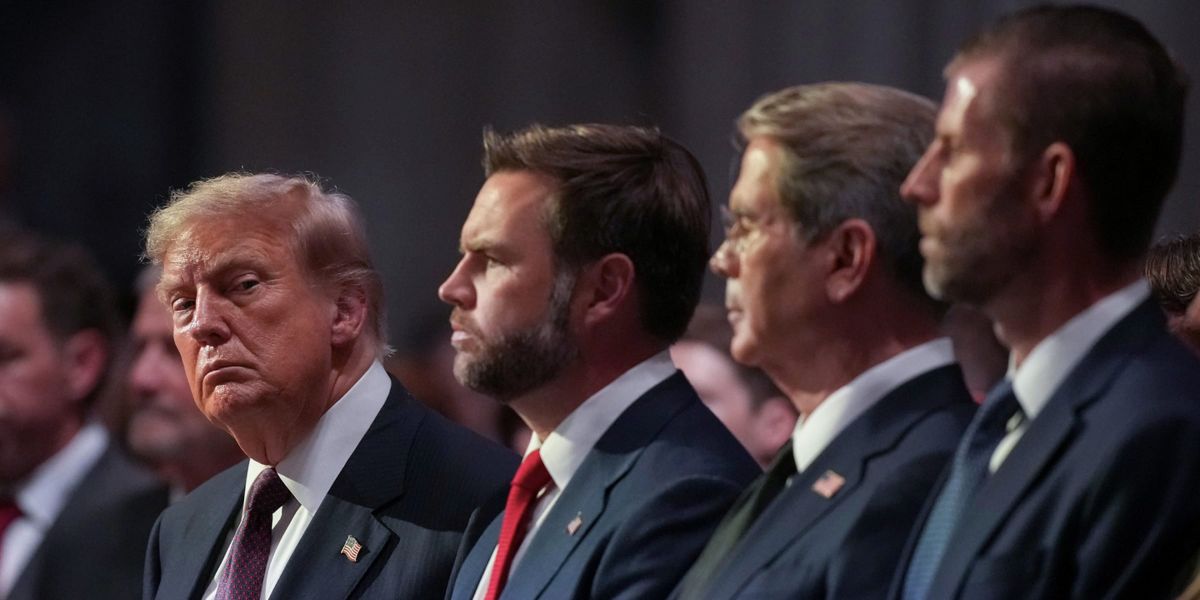
Lindsey Graham Honored at Capitol as Online Viewers Notice Who Was Missing from the Service – And a Second Funeral in South Carolina Is Still Ahead
July 29, 2026

Lindsey Graham's Senate Seat Has a New Owner — And the Choice Is Already Making History
July 13, 2026
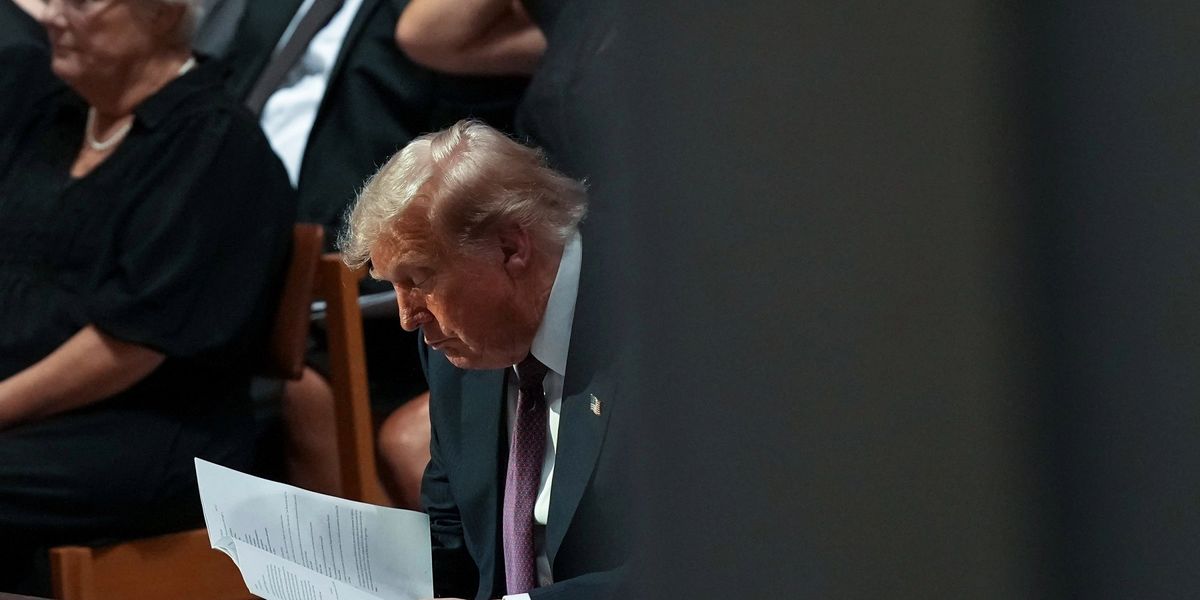
Donald Trump Spotted Doing Something Unexpected at Lindsey Graham’s Funeral That Has Netizens Talking
July 28, 2026
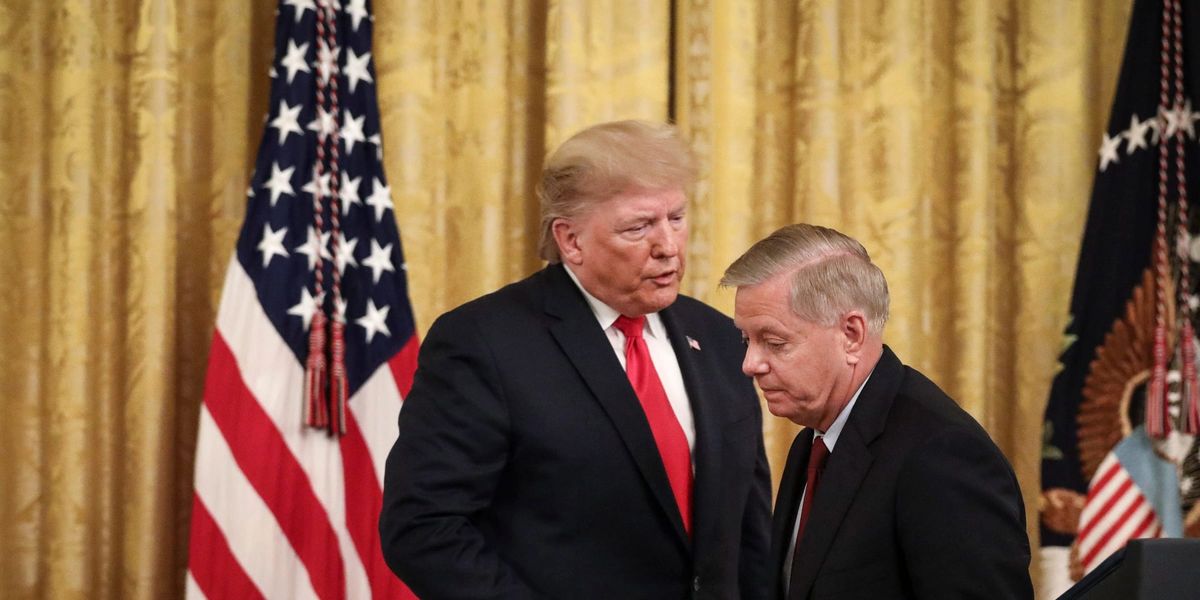
Donald Trump Delivers Tribute for Lindsey Graham — But One Moment at the Funeral Has Netizens Talking
July 29, 2026
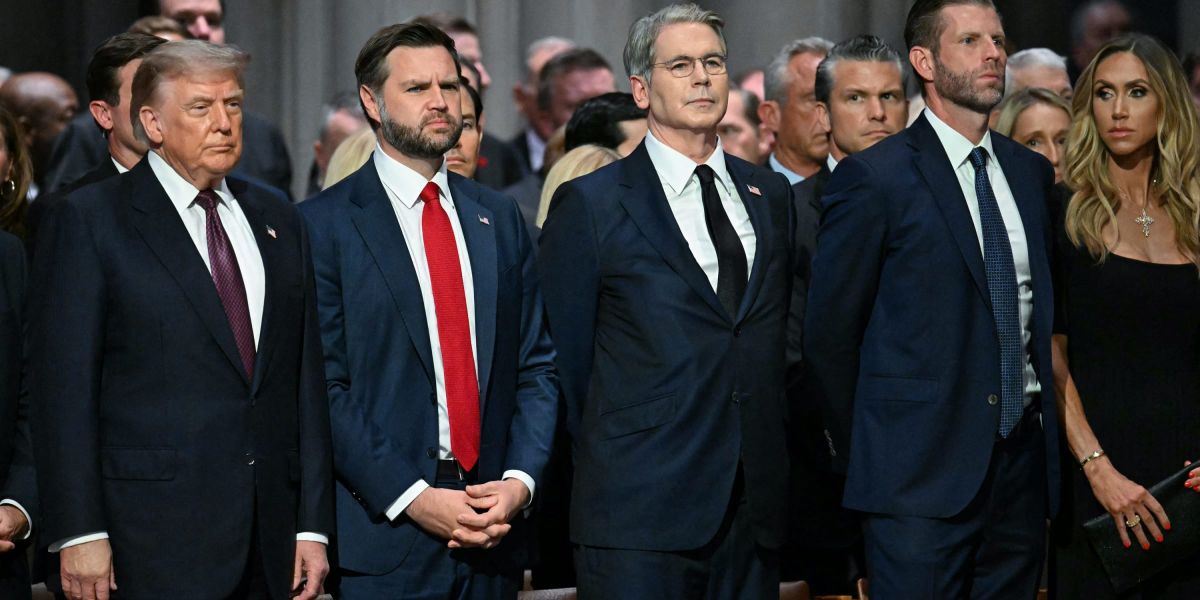
Lindsey Graham's Funeral: JD Vance's Casket Moment Catches Eyes — and His Niece's Words Leave No Dry Eye in the Cathedral
July 29, 2026
Lindsey Graham's Casket Arrives at the Capitol Rotunda as Onlookers React to the Moment — Video
July 29, 2026

Lindsey Graham's Sister Breaks Her Silence, Trump Recalls His 'One Bad Moment,' and His Estate Raises New Questions
July 14, 2026

Lindsey Graham's Sister Reveals Her Decision After Trump Personally Asked Her to Run
July 23, 2026

He Never Married, but Lindsey Graham Sacrificed Everything for One of the Two Most Important Women in His Life
July 13, 2026

Senator Mitch McConnell Seen on a Stretcher in Ambulance Video — Witnesses Detail What They Noticed About His Feet
July 11, 2026