
Maldives Diving Expedition Ends in Mystery — What Experts Discovered Will Shock You
May 16, 2026


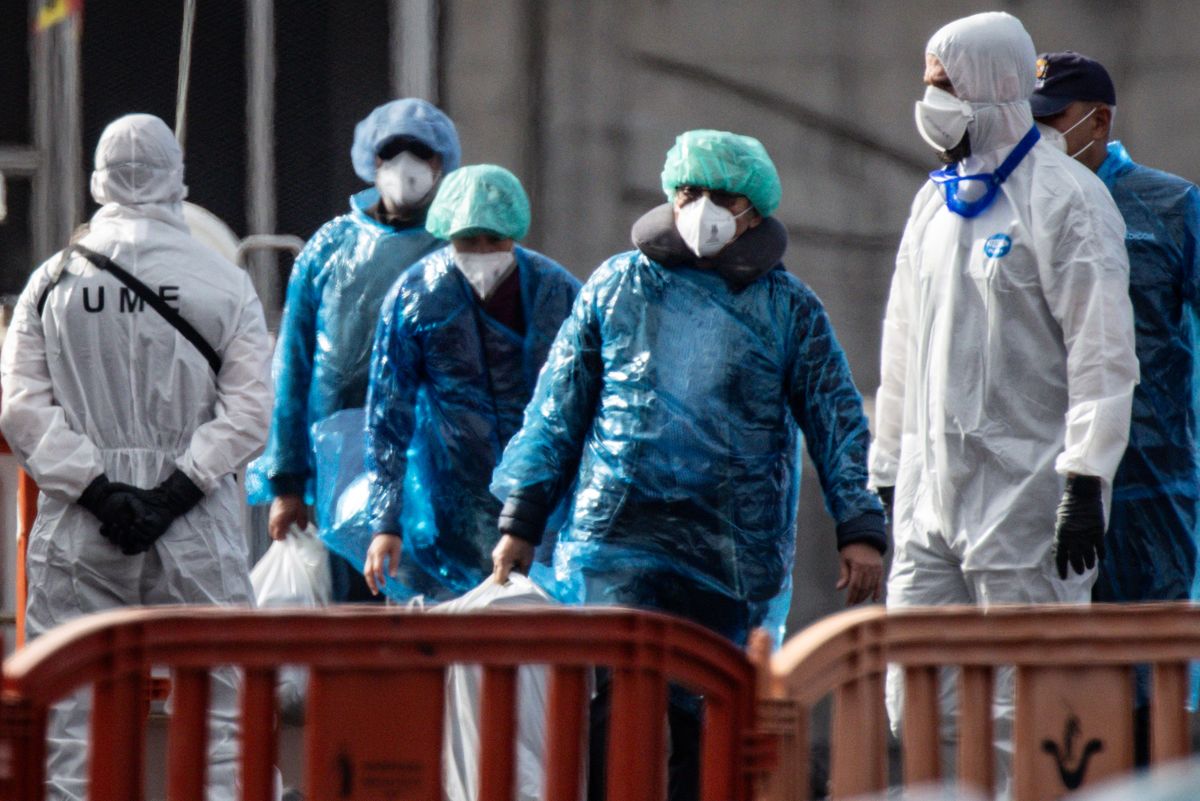

Health officials are racing to understand how a rare hantavirus outbreak spread across a cruise ship. New details are emerging about the first passenger believed to have contracted the virus.
The grim mystery surrounding the deadly hantavirus outbreak aboard the MV Hondius has taken an even darker turn. Investigators have identified the man they now believe may have unknowingly brought the virus onboard before a terrifying chain of events unfolded across the expedition ship.

Cruise ship MV Hondius stationary off the port of Praia, the capital of Cape Verde, on May 5, 2026. | Source: Getty Images
Authorities say Dutch ornithologist Leo Schilperoord, 70, is now suspected to be the outbreak's "patient zero" after he fell violently ill during the voyage and later died at sea. Days later, his wife, Mirjam Schilperoord, 69, also succumbed to the disease after desperately attempting to return home to the Netherlands.
The heartbreaking revelations have stunned both the scientific and birdwatching communities, where the couple was widely known for their decades-long passion for wildlife exploration and exotic bird expeditions.
According to investigators, the pair may have contracted the rare and highly feared Andes strain of hantavirus during a stop near Ushuaia, Argentina, shortly before boarding the ship.

Aerial view shows health personnel assisting patients onto a boat from the cruise ship MV Hondius, while stationary off the port of Praia, the capital of Cape Verde, on May 6, 2026. | Source: Getty Images
The Schilperoords, from the quiet Dutch village of Haulerwijk, had reportedly spent months traveling across South America on what loved ones described as a long-awaited birdwatching adventure. Obituaries published in their local village magazine painted a picture of a deeply devoted couple bonded by their love of ornithology, conservation, and travel.
Leo and Mirjam had previously co-authored research on pink-footed geese and were said to have traveled the globe in pursuit of rare species, including journeys through Sri Lanka and South America. But what began as an idyllic expedition into the wild soon spiraled into tragedy.

Cruise ship MV Hondius stationary off the port of Praia, the capital of Cape Verde, on May 4, 2026. | Source: Getty Images
Argentine officials now believe the couple may have been exposed to the virus while visiting a landfill site outside Ushuaia in late March — an area reportedly frequented by birdwatchers eager to catch a glimpse of Darwin's caracara, a rare bird species native to the region.
Investigators suspect the deadly infection may have spread through airborne particles contaminated by rodent droppings. The Andes strain has sparked particular alarm among health officials because it remains the only known form of hantavirus capable of person-to-person transmission.

Health personnel returning from the cruise ship MV Hondius, are seen at the port of Praia, the capital of Cape Verde, as individuals wearing hazmat suits are helped into an ambulance on May 6, 2026. | Source: Getty Images
Just four days after visiting the suspected exposure site, the couple boarded the MV Hondius on April 1, alongside more than 100 passengers, many of whom were scientists and fellow bird enthusiasts. Then came the first chilling signs that something was terribly wrong.
Leo reportedly began suffering symptoms on April 6, including fever, severe stomach pain, headaches, and diarrhea. What initially may have appeared to be a routine illness rapidly escalated into a medical nightmare.
Five days later, he was dead on board the ship. Mirjam later disembarked in Saint Helena while accompanying her husband's body before continuing toward South Africa.

Cruise ship MV Hondius stationary off the port of Praia, the capital of Cape Verde, on May 5, 2026. | Source: Getty Images
But the horror was far from over. While attempting to board a flight back to the Netherlands, Mirjam reportedly became gravely ill and later collapsed at the airport before dying. The shocking double tragedy has fueled mounting fears online as details about the outbreak continue spreading across social media.
As health officials continue tracing possible exposures and monitoring passengers, online reactions have become increasingly anxious, with many openly questioning whether the public fully understands the seriousness of the situation. Some commenters focused on unsettling images showing health workers responding to the outbreak in protective equipment.

Health workers in protective gears transfer patients with an ambulance after three suspected cases of hantavirus is evacuated from a ship in Praia, Cape Verde, on May 6, 2026. | Source: Getty Images
"Look closely at the suits the Hantavirus crews are wearing," one commenter wrote. Others warned that the outbreak could be more dangerous than initially believed. "I'm afraid this might be a Category 2 disease," one person commented, while another wrote, "This is very serious." "Are you saying this is more serious than we think?" another person asked.
The growing alarm comes as authorities continue attempting to reassure the public that the broader risk remains low despite the terrifying circumstances surrounding the deaths.
Health officials are still investigating the outbreak, including the possibility of transmission patterns linked to the Andes strain, which has long concerned experts due to its rare ability to spread between humans.

A person in a hazmat suit is escorted to a ambulance from a medical aircraft allegedly carrying some of the passengers from the cruise ship MV Hondius believed to be infected with hantavirus, at Schiphol airport near Amsterdam on May 6, 2026. | Source: Getty Images
Health officials are racing to understand how a rare hantavirus outbreak spread across a cruise ship. New details are emerging about the first passenger believed to have contracted the virus.
As fears surrounding the deadly cruise ship outbreak continue to spread, health experts have also been racing to explain exactly how hantavirus is transmitted, what symptoms people should watch for, and why the Andes strain has triggered such intense concern among scientists.

The first passengers from the MV Hondius depart for Tenerife Airport, escorted by a member of Spainâs External Health Service, after disembarking at Granadilla Port in Tenerife, Canary Islands, on May 10, 2026. | Source: Getty Images
Hantaviruses are primarily spread through infected rodents and their bodily fluids, including urine, saliva, and droppings. People most often contract the virus after inhaling contaminated particles that become airborne.
According to health authorities, infection can also occur after touching contaminated surfaces and then touching the mouth, nose, or eyes, consuming contaminated food, or through rodent bites and scratches. Most hantavirus strains found across North and South America can cause hantavirus pulmonary syndrome (HPS) — a severe and potentially deadly respiratory disease.

Passengers carry their belongings in plastic bags after being evacuated from the MV Hondius after docking in the Granadilla Port on May 10, 2026 in Tenerife, part of the Canary Islands, Spain. | Source: Getty Images
The Andes strain now linked to the MV Hondius outbreak is considered particularly alarming because it is one of the only known hantavirus strains ever shown to spread between humans.
Early symptoms of HPS can initially appear deceptively mild, often resembling the flu. Patients may experience fever, fatigue, headaches, stomach pain, and severe muscle aches before the illness rapidly worsens. In more serious cases, victims can later develop terrifying breathing complications as fluid begins filling the lungs, making it increasingly difficult to breathe.

Passengers carry their belongings in plastic bags after being evacuated from the MV Hondius after docking in the Granadilla Port on May 10, 2026 in Tenerife, part of the Canary Islands, Spain. | Source: Getty Images
Health experts continue stressing that early medical intervention is absolutely critical. There is currently no specific antiviral medication or vaccine available to treat hantavirus infections.
Instead, patients suspected of having HPS are usually placed under intensive supportive care, where doctors work to stabilize breathing and support the body as the illness progresses. According to the Centers for Disease Control and Prevention, nearly four in ten people diagnosed with HPS ultimately do not survive.

Medical teams and officials prepare for passengers to arrive after the MV Hondius docked in the Granadilla Port on May 10, 2026 in Tenerife, part of the Canary Islands, Spain. | Source: Getty Images
The outbreak has also reignited widespread public interest in hantavirus following the deaths of legendary actor Gene Hackman and his wife, Betsy Arakawa, in 2025. Authorities determined that Betsy died from hantavirus pulmonary syndrome after likely being exposed to rodent droppings near the couple's home.

Workers arrive wearing protective clothing after the MV Hondius docked in the Granadilla Port on May 10, 2026 in Tenerife, part of the Canary Islands, Spain. | Source: Getty Images
Gene himself, however, did not die from the virus. Officials said his death was caused by natural complications related to heart disease and Alzheimer's disease.
Scientists say the situation aboard the MV Hondius stands out because investigators now suspect that at least some infections may involve person-to-person transmission linked to the Andes strain. Even so, health specialists continue emphasizing that the virus is unlikely to spread broadly through commercial air travel.

A passenger carries their belongings in a plastic bag to a waiting bus after being evacuated from the MV Hondius after docking in the Granadilla Port on May 10, 2026 in Tenerife, part of the Canary Islands, Spain. | Source: Getty Images
Robert Cross, an associate professor at the University of Texas Medical Branch, said that "the average person has no reason to worry" and added that transmission risk aboard airplanes remains "virtually no risk" within the United States.
He also noted that modern aircraft already use sophisticated air filtration systems specifically designed to reduce the spread of infectious diseases.
Experts say travelers who remain concerned can further reduce their risk by practicing careful hand hygiene and wearing N95 respirators, particularly when traveling in regions where the Andes strain is known to circulate. Meanwhile, health authorities have continued piecing together a clearer timeline of the terrifying outbreak aboard the MV Hondius.

Passengers are evacuated by small boat from the MV Hondius in the Granadilla Port on May 10, 2026 in Tenerife, part of the Canary Islands, Spain. | Source: Getty Images
The World Health Organization also confirmed that a German passenger developed symptoms toward the end of April before later dying on board the vessel on May 2. Investigators are still working to determine exactly how the virus spread among passengers — and whether some of the cases involved direct human-to-human transmission.
Maldives Diving Expedition Ends in Mystery — What Experts Discovered Will Shock You
May 16, 2026

San Diego Islamic Center Attack Leaves Behind Disturbing Evidence That Reveals Motive
May 18, 2026

'It Was Horrible': Witnesses Describe the Chaos That Unfolded at Seattle Festival
July 27, 2026
What Went Wrong on the Maldives Diving Excursion That Claimed 5 Lives
May 19, 2026

Hospital Employee's Routine Day Ends in Tragic Way – Inside the Crisis
May 15, 2026
Pilot's Final Seconds Before Missouri Skydiving Plane Went Down Leave Investigators Searching for Answers — What the Evidence Shows
June 16, 2026

What Amanda 'Mandy' Karolkiewicz Posted Online Before the Michigan Tragedy Is Now Under a Microscope – Details
July 29, 2026

NBA Star Brandon Clarke Found in Shocking State at 29 — Investigation Underway
May 13, 2026

Michigan Mom Had Recently Returned from China with Her Adopted Daughters When Dispatch Audio Captured What Her Husband Left Behind
July 30, 2026

Parents Lose 6-Year-Old Daughter After What Was Meant to Be a 'Routine' Procedure
August 04, 2026

Nolan Wells Case: Sheriff Addresses the Rumors — and Says One Thing Could Really Help
July 15, 2026