
Video Shows Moments Before Air Canada Jet Incident At LaGuardia
March 24, 2026




A deadly runway collision at LaGuardia Airport in New York left devastation in its wake — but one survival story is raising questions. Now, a daughter reveals the single detail that may explain how her mother lived.
It looked like a tragedy with no escape. But one shocking survival has left everyone asking the same question — how did she make it out alive?
Because what happened in those few seconds doesn't just sound unlikely — it sounds almost impossible.

The accident site is seen at LaGuardia Airport in New York City on March 23, 2026. | Source: Getty Images
The crash happened Sunday evening, on March 22, 2026, triggering an immediate emergency response on the runway. At the Airport in New York, a flight arriving from Montreal struck an emergency vehicle during landing.
It was a controlled environment — until it suddenly wasn't. By the next day, March 23, 2026, operations were still disrupted, reflecting the seriousness of what had occurred.
And as the scale of the devastation became clear, one detail began to stand out. Someone had survived the impossible.
When the Air Canada Express flight collided with a fire truck at LaGuardia Airport, the aftermath was devastating. Two people lost their lives, and the scale of destruction was undeniable.
But among those caught in the crash was Quebec flight attendant Solange Tremblay, who somehow survived.
According to an exclusive interview with her daughter, Sarah Lépine, Solange was seated behind the pilots as the plane was landing.
Then, in an instant, everything changed.
She was thrown out of the aircraft — still strapped into her seat — more than 100 meters away. And that's where the story becomes harder to explain.
For many, Solange's survival didn't make sense at first. Her daughter, Sarah, described the moment with disbelief:
"It's truly a miracle. At the moment of impact, her seat was thrown more than a hundred meters from the plane. They found it, and she was still strapped into her seat."
"She had a guardian angel watching over her. It could have been much worse," she added. But even with those words, one question lingered: what actually saved her?
Solange suffered multiple fractures and will need surgery for a broken leg. But remarkably, her life is not in danger. And in a crash that turned deadly, her survival now stands as one of its most extraordinary outcomes.
But none of that explains how she survived. And that question is what led to one critical detail.
Here's where the story takes a crucial turn — and where the answer may finally come into focus.
Aviation safety expert Jeff Guzzetti explained in an NBC New York report that Solange's survival could come down to one specific factor: the seat she was in. Unlike passenger seats, flight attendant jump seats are built to withstand extreme crash forces.
"The flight attendant's seat is kind of a jump seat that folds down and is bolted to the wall," Jeff said. "It's a very robust seat."
And that detail may have made all the difference. "It's designed to withstand probably more crash loads than passenger seats because you need the flight attendant to help passengers get out of an airplane after a crash."
In the end, the story isn't just about survival — it's about how that survival happened. Not luck alone. Not chance alone. But a single, critical detail — a seat designed to endure the unimaginable — that may have turned what should have been fatal into something almost unbelievable.
But to understand just how extraordinary her survival was, you have to look at what unfolded inside the cabin in those chaotic final seconds. One passenger recounted terrifying moments after an Air Canada plane crash at LaGuardia Airport, describing a sudden jolt and a last-second action during landing.
According to the passenger, what followed unfolded in a matter of seconds. At first, many on board didn't realize just how serious the situation had become.

Travelers wheel their luggage away from LaGuardia Airport in New York on March 23, 2026 | Source: Getty Images
As the situation unfolded on the ground, air traffic control audio captured the immediate aftermath of the incident.
When the audio resumed, the tone had completely changed. The calm rhythm of instructions was gone, replaced by the stunned language of people reacting to something they had just seen unfold.
At 10:16, one voice says, "We're holding here." A second later comes the explanation:
"Alright, there's an incident on the field."
The reply says it all:, "Yeah, we saw it, man."

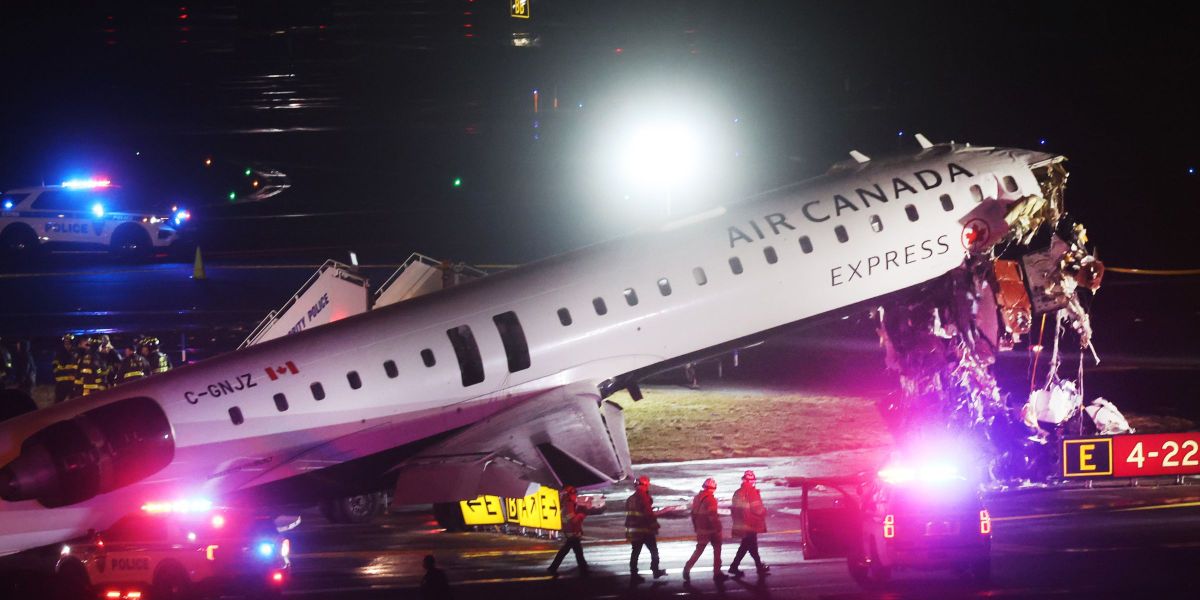
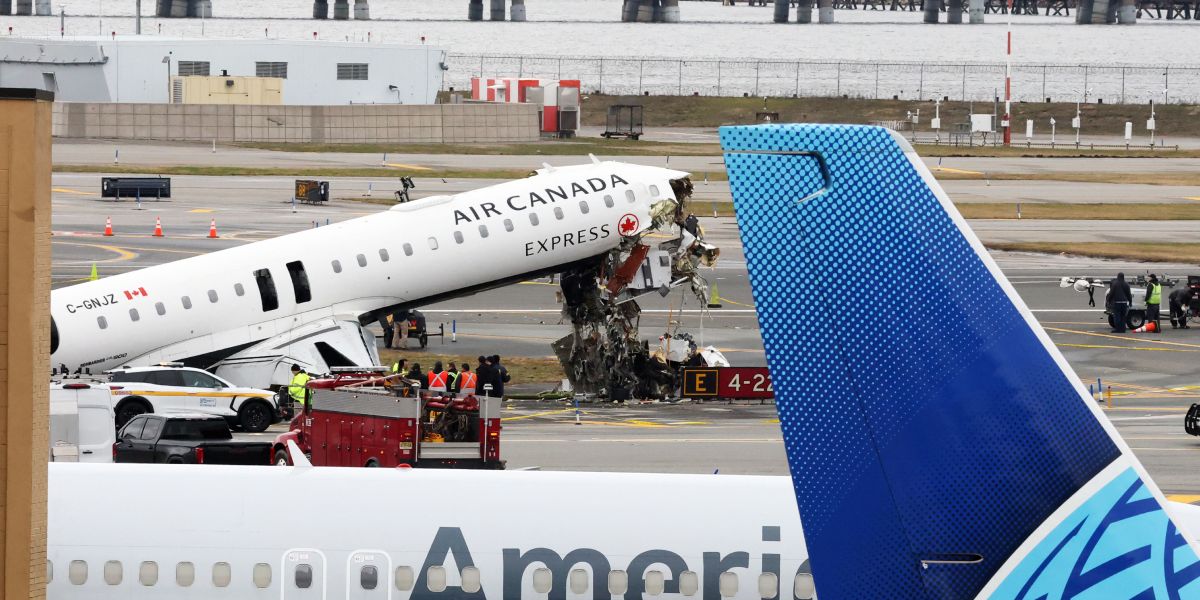
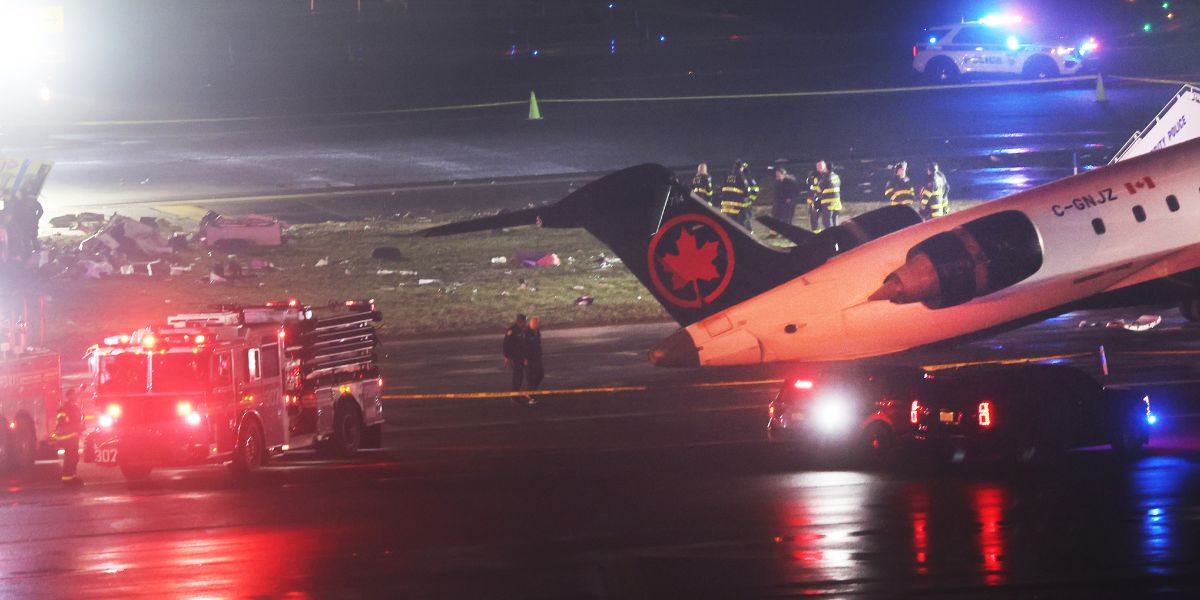
Emergency responders work at the scene where an Air Canada Express CRJ-900 sits on the runway after colliding with a Port Authority fire truck at LaGuardia Airport on March 23, 2026, in New York City | Source: Getty Images
From there, operations appeared to grind to a halt. By 11:42, the recording said that the airport had shut down due to an active incident on the field. The dispatcher told the crew to wait and check back in ten minutes.
The shutdown continued well beyond the immediate aftermath. At 18:08, another message stated, "We're not moving aircraft right now, all right. When I have more for you, I will reach out. I don't know, just call the tower, and we'll figure it out. This could have been a big incident."
But the most devastating exchange came near the end of the recording, when the emotional weight of what happened seemed to land in full.

Port Authority representative gives press conference after an An Air Canada Express plane colliding with a fire truck at LaGuardia Airport on March 23, 2026, in New York City | Source: YouTube/NBC New York
At 25:26, one person mentioned that they were already working on the situation and commented on how difficult it was to watch.
Five seconds later, at 25:31, another voice said, "Yeah, I know I was here. I tried to reach out to my stuff, and we were dealing with an emergency earlier. I messed up."
The response, just seconds later, was the line that lingered: "No man, you did the best you could."
In a post shared on Reddit, a Redditor identified as bradysego12, who said they were on board, described how the situation escalated shortly after touchdown at LaGuardia Airport.
"We had just touched down and maybe about 30 seconds later we all felt a jolt forward, then a loud bang, and what felt like sliding sideways down the runway," the passenger wrote.
An accompanying image shows the aircraft's nose angled downward, with visible damage near the front, as emergency lights reflect across the wet tarmac — an eerie snapshot of the aftermath.

An Air Canada Express plane sits on the runway after colliding with a fire truck at LaGuardia Airport in New York on March 23, 2026 | Source: Getty Images
As confusion spread inside the cabin, the passenger recalled hearing that a last-second maneuver may have prevented an even worse outcome. The person shared:
"But someone did say the pilot tried to reverse thrust at the last second. Honestly, they likely saved our lives. I wish I could tell their families how thankful I am. They are heroes ❤️."
Despite the severity of the incident, the passenger said they were physically unharmed but emotionally shaken, adding they felt "horribly sick" over those who died.

Travelers leave LaGuardia Airport after a collision between an Air Canada Express plane and a fire truck shut down operations in New York City on March 23, 2026 | Source: Getty Images
A reported footage from the scene showed an emergency fire truck crushed against the nose of the plane.
More details from BBC live said the aircraft, carrying 72 passengers and four crew members, had arrived from Montreal on Sunday evening, March 22, and was traveling at about 24 mph.

A traveler looks at canceled flight schedules on a screen at Terminal B in LaGuardia Airport on March 23, 2026, in New York City | Source: Getty Images
A separate BBC update laid out the broader sequence of events. According to that timeline, the Air Canada flight departed Montreal at 10:12 p.m. ET, more than two hours behind schedule.
Minutes before 11:40 p.m., a Port Authority rescue and firefighting vehicle was dispatched to assist with a separate issue involving a plane at LaGuardia that had requested support. At about that same time, the aircraft collided with the truck on the ground while landing.

Port Authority representative gives press conference after an An Air Canada Express plane colliding with a fire truck at LaGuardia Airport on March 23, 2026, in New York City | Source: YouTube/NBC New York
Emergency crews responded right away after the impact. By 3:09 a.m., LaGuardia said the airport was closed because of the incident, and around 3:30 a.m., the first portion of the National Transportation Safety Board team arrived.
At 4:48 a.m., Port Authority Executive Director Kathryn Garcia said two Air Canada pilots had died, and nine people remained in the hospital. Two Port Authority police officers were also badly injured.

Port Authority representative gives press conference after an An Air Canada Express plane colliding with a fire truck at LaGuardia Airport on March 23, 2026, in New York City | Source: YouTube/NBC New York
Additionally, she said the airport would stay closed until at least 2:00 p.m. local time so investigators could continue processing the scene. Federal and local investigations are now underway.
Further updates said 41 passengers and crew members were taken to hospitals, along with two officers who had been inside the ground vehicle, while 32 of those hospitalized have since been released.
Pilots have raised concerns in recent years about potential hazards at LaGuardia Airport, including miscommunication and air traffic control challenges, according to a CNN review of government safety reports.
Some warnings were urgent. In one report submitted last summer to NASA's Aviation Safety Reporting System, a pilot described a close call involving unclear guidance from controllers and urged action, writing, "Please do something."
Other reports pointed to increasing pressure on operations at the airport. One pilot noted that the pace of activity was intensifying, adding that controllers appeared to be operating at their limits, particularly during severe weather.

Planes parked at LaGuardia Airport after flight cancellations in New York City on March 23, 2026 | Source: Getty Images
These concerns have drawn renewed attention following the collision between an Air Canada plane and a fire truck during landing.
According to an NBC New York report, the trouble began when Flight 2384 declared an emergency after flight attendants in the back of the aircraft reportedly became sick because of an odd smell.
The urgency came through almost immediately in the transcript of the recording. At 1:35, a voice said, "2384 is declaring an emergency. Flight Attendants in the back are feeling ill because of the odor. We will need to go into any available gates at this time."

An Air Canada Express plane sits on the tarmac after colliding with a fire truck at LaGuardia Airport on March 23, 2026, in New York City | Source: YouTube/KHOU 11
That request did not appear to have an easy solution. Just seconds later, the discussion turned to finding space for the aircraft, with one line making clear the situation was already getting complicated.
At 1:55, someone is heard asking, "Do you guys have any gate for United? Because now it's declaring an emergency, they want to get out."

Passenger plane collides with a fire truck while landing at LaGuardia Airport on March 23, 2026, in New York City, New York | Source: Getty Images
Then at 3:04, the pressure seemed to build even more:
"Hey, I'll say it again, LaGuardia. Now that United says he needs a gate, but so now he's declaring an emergency, but the ramp doesn't have a gate for him."

An Air Canada Express plane sits on the tarmac after colliding with a fire truck at LaGuardia Airport on March 23, 2026, in New York City | Source: YouTube/KHOU 11
As responders worked to manage the situation, the transcript showed preparations being made in case passengers needed to get off the plane without a gate.
At 3:19, one person said, "We can get a sand truck if you need them to get off the plane." Just moments later came the response: "Okay, yeah, yeah, do that just in case they want to come off."

Passenger plane collides with a fire truck while landing at LaGuardia Airport on March 23, 2026, in New York City, New York | Source: Getty Images
Even then, the crew seemed to prefer waiting rather than rushing into an evacuation. The ground crew later messaged the aircraft at 3:35 to explain that the ramp lacked an available gate. The dispatcher added that they were contacting the Port Authority to find an alternative solution.

Emergency personnel around the tarmac after an An Air Canada Express plane colliding with a fire truck at LaGuardia Airport on March 23, 2026, in New York City | Source: YouTube/KHOU 11
That was followed by another update at 3:43:
"And the fire trucks are over there. They're gonna bring a stair up, just in case you guys do want to evacuate. Let me know if you do."
The flight crew responded almost instantly, highlighting the urgent need for a resolution. At 3:48, they confirmed their preference to wait for an available gate but warned that their time was running out due to a persistent smell at the rear of the cabin.

Emergency personnel around the tarmac after an An Air Canada Express plane colliding with a fire truck at LaGuardia Airport on March 23, 2026, in New York City | Source: YouTube/KHOU 11
As the minutes passed, the audio became even more striking because it captured how normal communication suddenly gave way to confusion.
At 6:25, the aircraft asked again, "2384, Do you have a gate available at this time? Otherwise, we will be probably requesting gears here."

The accident site is seen at LaGuardia Airport after an Air Canada plane collided with a fire truck while landing on March 23, 2026, in New York City | Source: Getty Images
At 6:31, the dispatcher asked the crew for a brief moment to coordinate further. The situation then changed as the teams began coordinating the arrival.
At 6:45, someone asked whether the emergency vehicles were using the ground or tower radio channel. Less than 30 seconds later, the tower cleared flight 2384 to enter lane eight for gate 41.

The accident site is seen at LaGuardia Airport after an Air Canada plane collided with a fire truck while landing on March 23, 2026, in New York City | Source: Getty Images
By 7:03, the crew received orders to head to the ramp and briefly confirmed they were moving in.
And then the transcript reached the moment that now stood out the most.
At 7:10, "Truck 1" was heard. Seven seconds later came a blunt warning: "Truck 1, stop." The next moments couldn't be heard clearly.

Emergency personnel around the tarmac after an An Air Canada Express plane colliding with a fire truck at LaGuardia Airport on March 23, 2026, in New York City | Source: YouTube/KHOU 11
That abrupt sequence was what made the audio so haunting. It captured the final attempt to halt the truck before the recording dropped into confusion.
Following the collision, authorities also warned travelers to brace for major disruption around the airport. The New York City Fire Department told the public to expect cancellations, road closures, traffic delays, and a heavy emergency presence near LaGuardia.
The chaos on the ground left stranded travelers trying to make sense of what had happened. In another BBC report, 26-year-old Katie Rojas said her flight to Chicago was already on the runway and prepared to depart when all planes were grounded.

Passengers wait outside Terminal B at LaGuardia Airport following its closure after a deadly runway collision on March 23, 2026, in New York City | Source: Getty Images
"It tried taking off twice and both times literally stopped in its tracks," she said, explaining that after two and a half hours on board, passengers were told they had to evacuate. She added, "They said there was a smell coming from the plane. I don't know if that was just something they were saying."
After returning to the terminal, Rojas said she saw emergency vehicles everywhere and only later learned about the crash online. She was first rebooked for a 7:00 a.m. flight that was also canceled, then placed on a 3:20 p.m. departure, but said security was closed and she had no way to check her bags.

Passengers speak with staff at a service desk at LaGuardia Airport following its closure after a runway collision on March 23, 2026, in New York City | Source: Getty Images
By that point, she had been waiting at the airport for 12 hours, hoping to finally get home. Reflecting on the crash, she said, "It's scary. You never know if it could have been one of us."
That context made the audio even harder to hear. A fast-moving but controlled emergency response ended up with a runway shut down, lives lost, people injured and scared, an airport plunged into chaos, and a recording that now serves as a minute-by-minute account of how everything went wrong.

Travelers wait inside LaGuardia Airport after flight cancellations in New York City on March 23, 2026 | Source: Getty Images
The crash followed a series of recent incidents and near misses in the region, according to CNN.
In October 2025, two Delta regional jets collided on a LaGuardia taxiway, sending one person to the hospital. More recently, a close call in Newark involved two aircraft attempting to land on intersecting runways.

Delta Air Lines aircraft at LaGuardia Airport after two planes collided while taxiing in New York on October 2, 2025 | Source: Getty Images
Over the past two years, multiple reports have described narrowly avoided collisions at LaGuardia.
Many of these accounts cite confusion or miscommunication involving air traffic control and were submitted through a voluntary reporting system used by aviation personnel.
One report from December 2024 described how a plane came dangerously close to another aircraft on the ground after receiving incorrect instructions.
Months earlier, a copilot reported a similar situation in which a plane was cleared to cross a runway while another aircraft was landing. "Ground Control issued a stop command just in time," one report stated.
Although the reports are not always independently verified, they are reviewed by safety analysts who flag potential risks to federal regulators. Some also highlight broader challenges, including staffing shortages and congestion in busy airspace.

American Airlines planes parked at gates at LaGuardia Airport in New York on November 12, 2024 | Source: Getty Images
In the end, what unfolded at LaGuardia was a story of both loss and survival, shaped in a matter of seconds by decisions, design, and sheer circumstance.
And while investigators continue searching for answers, one truth remains clear: in a moment when everything went wrong, a few critical factors — seen and unseen — made the difference between tragedy and the impossible.
Video Shows Moments Before Air Canada Jet Incident At LaGuardia
March 24, 2026

Air Traffic Control Audio Reveals the Exact Timeline of LaGuardia Air Canada Plane Incident
March 23, 2026
Mackenzie Gunther, Co-Pilot in LaGuardia Incident, Remembered by Friends and Seneca College Students
March 25, 2026

New York Plane Crash Audio Reveals 3 Chilling Words Moments Before Impact
March 23, 2026
New Details Emerge Following the LaGuardia Airport Incident That Claimed the Lives of Two Pilots
March 23, 2026

Solange Tremblay Seen Recovering in Hospital Following LaGuardia Airport Incident – Photos
March 30, 2026

Experts Reveal the Safest Plane Seats That Could Save Your Life in an Emergency
March 31, 2026

'Dancing With the Stars' Alum Charlotte Jørgensen Was Among the Passengers Aboard the Plane Involved in the Laguardia Incident
March 31, 2026

Expert Reveals One Key Reason the Flight Attendant Likely Survived a 300-Foot Ejection in the LaGuardia Crash
March 25, 2026
What the Pilots Might Have Seen Before the Collision at LaGuardia Airport
March 25, 2026

United Passenger Causes Chaos on Board – Audio Reveals What Happened
May 04, 2026