
Plane Crashes Into Residential Building – Details Emerge
May 06, 2026



Every airplane emergency unfolds differently, but experts say seat choice and aircraft design can quietly shape a passenger's chances of survival.
After incidents like the recent scare at LaGuardia Airport, many travelers are left reconsidering where they sit when they fly. While no position guarantees safety, aviation specialists point out that certain sections of an aircraft may offer better odds in extreme situations, depending on the nature of the emergency.

First class and Economy Plus seating inside a United Airlines Express CRJ-450 is displayed during a media event showcasing the airline's new premium "Elevated" aircraft interior at Los Angeles International Airport on March 24, 2026 | Source: Getty Images
The deadly incident at LaGuardia Airport, which claimed the lives of both pilots and left dozens of passengers injured, has once again raised concerns about airline safety.
The Air Canada plane, carrying 72 passengers and four crew members, collided with a Port Authority vehicle while landing on the night of March 22, leaving the nose of the aircraft destroyed.

An Air Canada Express CRJ-900 sits on the runway after colliding with a Port Authority fire truck at LaGuardia Airport on March 24, 2026 in New York City | Source: Getty Images
As authorities work to determine the cause, travelers have been revisiting a familiar question — whether where you sit on a plane can affect your chances of survival.
Daniel Bubb, a former pilot and aviation specialist at the University of Nevada, Las Vegas, has indicated that while no seat can guarantee safety, some positions may offer an advantage.

The interior cabin of a LOT Polish Airlines Embraer ERJ-175 operating a domestic flight is seen during cruise on January 17, 2026 | Source: Getty Images
He explained that seats toward the rear of the aircraft are often considered safer, as the front and middle sections tend to bear the brunt of impact in head-on collisions, similar to what occurred in the Jazz Air incident at LaGuardia.
Bubb added, "In this crash, we saw the front of the aircraft absorb most of the impact. Perhaps what was an anomaly — but thank goodness miraculous — was the flight attendant, who was seated in her jumpseat with her seat belt and harness on, surviving the crash when she was ejected 300 feet."

An Air Canada Express plane sits on the tarmac after it collided with a fire truck on the tarmac at LaGuardia Airport on March 23, 2026 in New York City | Source: Getty Images
Solange Tremblay was among the few who survived after being ejected from the Air Canada aircraft at LaGuardia Airport. Still secured to her seat, she sustained multiple fractures in one leg and underwent surgery, but was otherwise reported to be in stable condition.
Her daughter, Sarah Lepine, viewed her survival as nothing short of extraordinary. "I'm still trying to understand how all this happened, but she definitely has a guardian angel watching over her," said Lepine.
Aviation safety specialist Jeff Guzzetti also described her survival as remarkable, especially given the severe damage to the front of the aircraft.
The former federal crash investigator noted that her position in a crew-designated seat, equipped with a four-point restraint system, likely played a key role in protecting her.
Guzzetti further explained, "The flight attendant's seat is kind of a jump seat that folds down and is bolted to the wall, the same wall that the cockpit utilizes."
He added that these seats are built to endure far greater impact forces than standard passenger seats. Their durability is intentional, as crew members must remain capable of assisting passengers during an emergency evacuation.

An Air Canada Express CRJ-900 sits on the runway after colliding with a Port Authority fire truck at LaGuardia Airport on March 24, 2026 in New York City | Source: Getty Images
Jim Brauchle, an aviation attorney with Motley Rice in South Carolina, has also shared insights on the ongoing discussion. He indicated that, during an emergency evacuation, seats located in exit rows are generally considered the most advantageous.
Proximity to any exit, he noted, can significantly affect how quickly passengers are able to leave the aircraft. He also emphasized that passengers should leave all personal belongings behind during an evacuation. Brauchle pointed out that recent incidents have shown people attempting to carry luggage with them, which can slow down the process.

Photo taken on March 25, 2024 shows the emergency exit facility and door of an Airbus A321 aircraft at Yantai Penglai International Airport in China's Shandong province | Source: Getty Images
In addition, he highlighted the importance of practical clothing, advising that comfortable, closed-toe shoes are better suited for emergencies than footwear like high heels, which can hinder movement.
Paying attention to safety briefings is equally important, particularly noting both the nearest and alternative exits in case one becomes inaccessible.

View of the safety instructions in an Airbus | Source: Getty Images
Steve Wright, a former systems and software engineer in the commercial aerospace sector and a past associate professor at UWE Bristol, has frequently explored the idea of the safest seat.
His assessment points to areas around the wings, where the aircraft's structure is typically stronger and may provide better protection during an impact.

The wing of a GOL Airlines plane is seen amid the clouds after taking off from Guarulhos International Airport in Sao Paulo, Brazil, on March 18, 2026 | Source: Getty Images
Meanwhile, Mary Schiavo, a former Inspector General at the U.S. Department of Transportation, has drawn from years of working with crash survivors to shape her own approach to flying.
She tends to choose seats in exit rows whenever possible, while also taking additional precautions such as carrying protective gear and wearing clothing that offers more coverage.

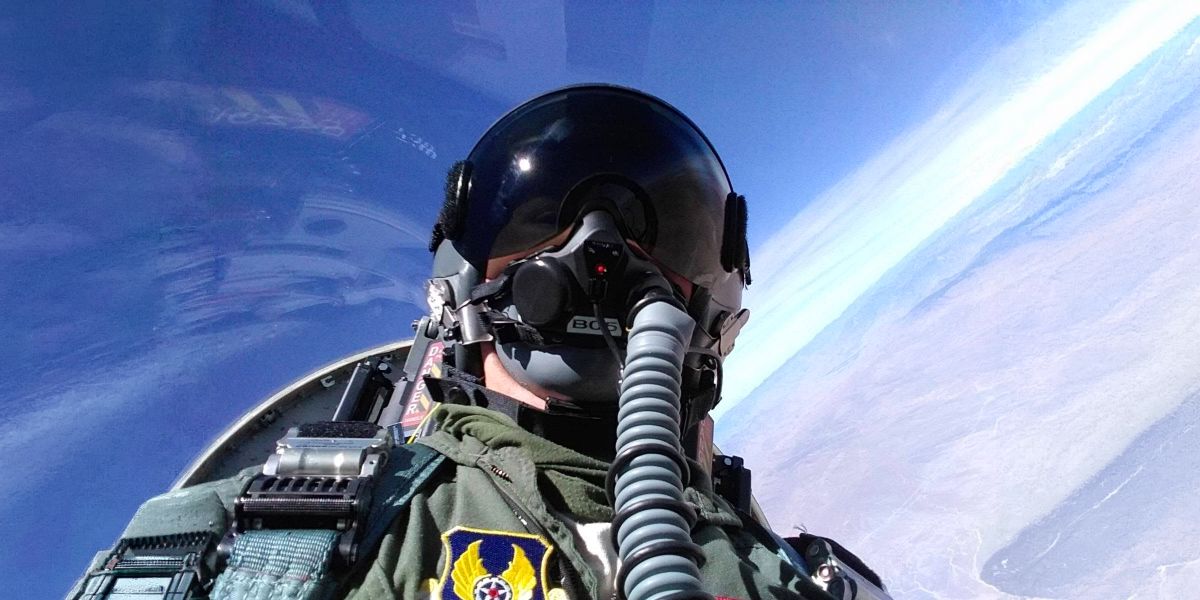
The pilot's helmet | Source: Getty Images
Her experience has shown that some survivors later wished they had taken extra steps to protect themselves. She also makes it a priority to understand how emergency exits operate, noting that mechanisms can vary between aircraft.
When exit row seats are unavailable, she opts for nearby rows, based on observations that passengers often move toward exits during emergencies.

Emergency exit of a Vueling Airbus 320 in El Prat Airport, Barcelona, Spain, on January 30, 2014 | Source: Getty Images
Research has also offered insight into seating safety. In 2015, Time analyzed aircraft accidents spanning 35 years, comparing fatalities and survivor patterns.
The findings suggested that seats in the rear section of a plane tend to have lower fatality rates — around 32% — compared to 39% in the middle and 38% in the front.

View into the seating area of an Airbus 350-900 on November 18, 2025 in United Arab Emirates, Dubai | Source: Getty Images
The analysis further indicated that middle seats in the rear section had the most favorable outcomes, with a fatality rate of about 28%. In contrast, aisle seats in the middle section showed the least favorable results, recording the highest fatality rate at 44%.
A 2017 study by the National Transportation Safety Board, which examined 20 crashes dating back to 1971, found that passengers seated toward the rear of an aircraft were more likely to survive than those in the front. It also suggested that seats positioned near the wings may offer an added advantage.

An Air Canada Express CRJ-900 sits on the runway after colliding with a Port Authority fire truck at LaGuardia Airport in New York, on March 23, 2026 | Source: Getty Images
Despite these insights, experts agree that survival in a crash depends heavily on the nature of the incident itself — something passengers cannot control.
For this reason, the Federal Aviation Administration continues to stress the importance of paying attention to crew instructions, identifying the nearest exits, and reviewing safety cards before takeoff to be better prepared in case of an emergency.
Plane Crashes Into Residential Building – Details Emerge
May 06, 2026

Man Who Breached Denver Airport Runway Identified After Fatal Frontier Collision
May 13, 2026
B-52 Engineer Passes Away in Crash, Leaving Behind a Family – Family Shares His Final Goodbye
June 17, 2026

Three Passengers Passed Away and Others Fell Ill After Suspected Hantavirus Outbreak on Cruise – Who the Affected People Are and What Symptoms They Experienced
May 04, 2026

From Beverley Callard's Knee to Spencer Matthews: What Stars Were Forced to Quit 'I'm A Celebrity... Get Me Out of Here' on Medical Grounds
April 24, 2026

Oliver Tree's Resurfaced Record Label Video Sparks Debate as Fans Point to One Detail They Can't Ignore
June 15, 2026

American Singer Oliver Tree, 32, Among 6 Dead in Rio Helicopter Collision — Here's What We Know
June 14, 2026
Hantavirus Update: Patient Zero Identified, How the Virus Spreads, and What Experts Predict Next
May 11, 2026

Suspected Hantavirus Outbreak Leaves Cruise Ship Passengers Trapped as Three Passed Away – Details
May 05, 2026

What Went Wrong on the Maldives Diving Excursion That Claimed 5 Lives
May 19, 2026

'I'm A Celeb' Star Beverley Callard, 69, Forced to Withdraw from Final on Medical Advice – Video
April 24, 2026