
The '90s singer | Source: YouTube/Project Hysteria
This '90s Singer Was 'Homeless' at 18 and Ate Leftovers – Later Facing $3 Million Debt Because of Her Mum. Her Hard Life Story on the Road to Fame Will Leave You Stunned

By
Akhona Zungu
May 06, 202609:59 A.M.
On a quiet afternoon in San Diego, an 18-year-old stood alone in a shop fitting room, a stolen dress stuffed into her trousers, staring at a reflection she barely recognised — and made a decision that would change the rest of her life.
Advertisement
When people think of Jewel, they picture the platinum-selling singer-songwriter who captured hearts in the 1990s with her folksy guitar playing and ethereal voice.

Jewel performs during Live 105's BFD at Shoreline Amphitheatre on 14 June 1996 in Mountain View, California. | Source: Getty Images
What fewer realise is that behind the success lies a story of survival – one that includes homelessness, hunger, illness, financial betrayal, and an extraordinary act of self-reinvention that began not in a recording studio, but in a shop fitting room.
Jewel Kilcher was born in Utah on 23 May 1974, but grew up in Homer, Alaska, in what she has described as a deeply turbulent household. Her parents divorced when she was just eight years old, and what followed was a childhood marked by instability on multiple fronts.
Advertisement

Jewel Kilcher with her family. | Source: YouTube/Project Hysteria
"My mom and dad got divorced when I was 8, and we went to live with my dad," Kilcher recalled on the "Verywell Mind" podcast in 2023. "Nobody told me it's because my mom didn't want to be a mom. She left us, and so my dad took over raising us. I didn't know that at the time."
Her father, Atz Kilcher – a folk singer himself – struggled with alcoholism and, Kilcher has alleged, was physically abusive. "My dad was this volatile alcoholic that hit me, very easy to identify [as a] 'bad guy,'" she said.
Advertisement

Young Jewel Kilcher performs with her father, Atz Kilcher. | Source: YouTube/Project Hysteria
Despite everything, the young Kilcher found herself craving the warmth of her mother, Lenedra Carroll, whose quiet and gentle demeanour seemed to offer the opposite of her father's volatility.
So desperate was she for that connection that she went to extreme lengths to seek her out. "I would hitchhike 500 miles to go see her. I'd show up on her doorstep," she recalled.

Jewel Kilcher and her brothers. | Source: YouTube/Project Hysteria
Advertisement
Only much later in life would she recognise that this seeming warmth concealed its own form of harm.
"I didn't realise I was being abused in another way at the time," she said. "If you asked me when I was 9 to maybe even in my 30s, I would've thought I had a supportive figure."

Jewel Kilcher with her siblings. | Source: YouTube/Project Hysteria
Leaving Home at 15
Kilcher ultimately fled her father's home at the age of 15. She briefly experienced periods without stable housing even then, but the most defining chapter of her homelessness came a few years later, when she was 18 and living in San Diego.
Advertisement
She had been renting a room, scraping together every last cent to make the payments. "I was paying rent on an apartment month to month; the last $5 was usually paid in change 'cause I was short," she said in an interview with Redbook.

Jewel Kilcher | Source: YouTube/Project Hysteria
Working as a hostess at a restaurant, she subsisted on scraps. "I was just eating leftover food and taking toilet paper out of the restrooms for my apartment. I wasn't buying groceries. Toothpaste was really the only thing I bought, because everything was going to rent," Kilcher continued.
Advertisement
Then came the incident that pushed her over the edge. Her boss propositioned her for sex. When she refused, he withheld her paycheque. She could not cover the rent. She was evicted.

Jewel Kilcher | Source: YouTube/Project Hysteria
Her plan initially seemed manageable. She would live in her car, find a new job, and get back on her feet within a couple of months. But things unravelled quickly. She kept falling ill, which meant missing work, which made it impossible to hold a job.
Then the car itself was stolen. Without an address, she could not even complete a job application. "It was really frightening," she said.
Advertisement
"I was homeless for a year when I was 18 – absolutely terrified, having panic attacks, shoplifting," Kilcher said during a mental health town hall hosted by the public network WETA in Washington, DC, in 2020.

Jewel Kilcher | Source: YouTube/Project Hysteria
A Near-Fatal Turning Point
The lowest point came when she fell desperately ill and sought help at an emergency room. She was turned away because she had no insurance.
"I almost died in an emergency room parking lot because they didn't see me because I didn't have insurance," she said in a 2023 interview for the PBS series "Brief But Spectacular", an excerpt of which was recently reshared by the programme.
Advertisement

Jewel Kilcher is photographed at under the Santa Monica Beach Pier on 25 April 1996. | Source: Getty Images
"Luckily, a doctor had seen me get turned away and he went out, and he knocked on my door, and he handed me antibiotics and his card. And he saved my life; it turned out I had sepsis," she explained.
It was a brush with death that would ultimately redirect her entire existence. "This was just the most transformative time in my life," Kilcher said.

Jewel attends 11th Annual American Cinematheque Awards Honoring Tom Cruise on 21 September 1996 at the Beverly Hilton Hotel in Beverly Hills, California. | Source: Getty Images
Advertisement
The Moment That Changed Everything
While the health scare was a physical wake-up call, the psychological turning point arrived in a rather unexpected setting. Kilcher was shoplifting – something she found herself doing regularly to survive – when she stepped into a shop fitting room and caught her own reflection in the mirror.
She was in the middle of shoving a dress into her trousers when the image stopped her cold. She later described the thought that struck her:
"I'm a statictic. I'm homeless and I'm stealing, I'm going to end up in jail or dead if I don't figure something out."

Jewel (born Jewel Kilcher) performs onstage at Farm Aid on 12 October 1996 in Columbia, South Carolina. | Source: Getty Images
Advertisement
Around the same time, she came across a quote that lodged itself in her mind: "Happiness does not depend on who you are or what you have, it depends on what you think."
From that moment, she committed to turning her life around one thought at a time. She developed a personal philosophy rooted in the idea that your hands are the servants of your thoughts – meaning the actions of the body flow directly from the mind.

Jewel performs on "The Tonight Show with Jay Leno" on 4 June 1996. | Source: Getty Images
So she began writing down everything her hands did throughout the day, even mundane tasks like opening a door and picking up a cup. After two weeks of this near-obsessive documentation, she looked back at her log and realised she had not experienced a single panic attack during that entire period.
Advertisement
She later understood what she had stumbled upon. "I had stumbled on becoming so obsessively curious about the present moment that I forgot to worry about things that weren't happening yet," she said. Without knowing it, she had been practising mindfulness.

Jewel Kilcher attends the fourth annual Michael Awards fashion gala on 22 April 1996 in New York City. | Source: Getty Images
The Mother Who Stole Millions
Kilcher's determination paid off — she went on to become one of the defining musical voices of the 1990s. But success brought its own devastating betrayal. Success, however, brought its own devastating betrayal.
Advertisement
As her career soared, Carroll – the soft-spoken mother she had once hitchhiked hundreds of miles to visit – had quietly positioned herself as her daughter's manager. For years, Kilcher trusted her completely.

Jewel attends 24th Annual American Music Awards at the Shrine Auditorium on 27 January 1996 in Los Angeles, California. | Source: Getty Images
It was only when Kilcher was in her 30s that the truth began to emerge. Carroll, she alleges, had been systematically embezzling her earnings. "She embezzled all of my money, over $100 million," Kilcher said on the Verywell Mind podcast.
The full scale of the damage became clear when Kilcher was 34. "I'm $3 million in debt, realise my mom stole it, realise everything I thought my mom was, isn't what she was," she said. "It is a very difficult psychological thing to come to terms with."
Advertisement

Lenedra Carroll and Jewel arriving at the "Helping Hands II: Handmade in America" celebrity art auction to benefit Sept. 11 Relief Funds at the New Folk Art Museum on 12 December 2001 in New York City. | Source: Getty Images
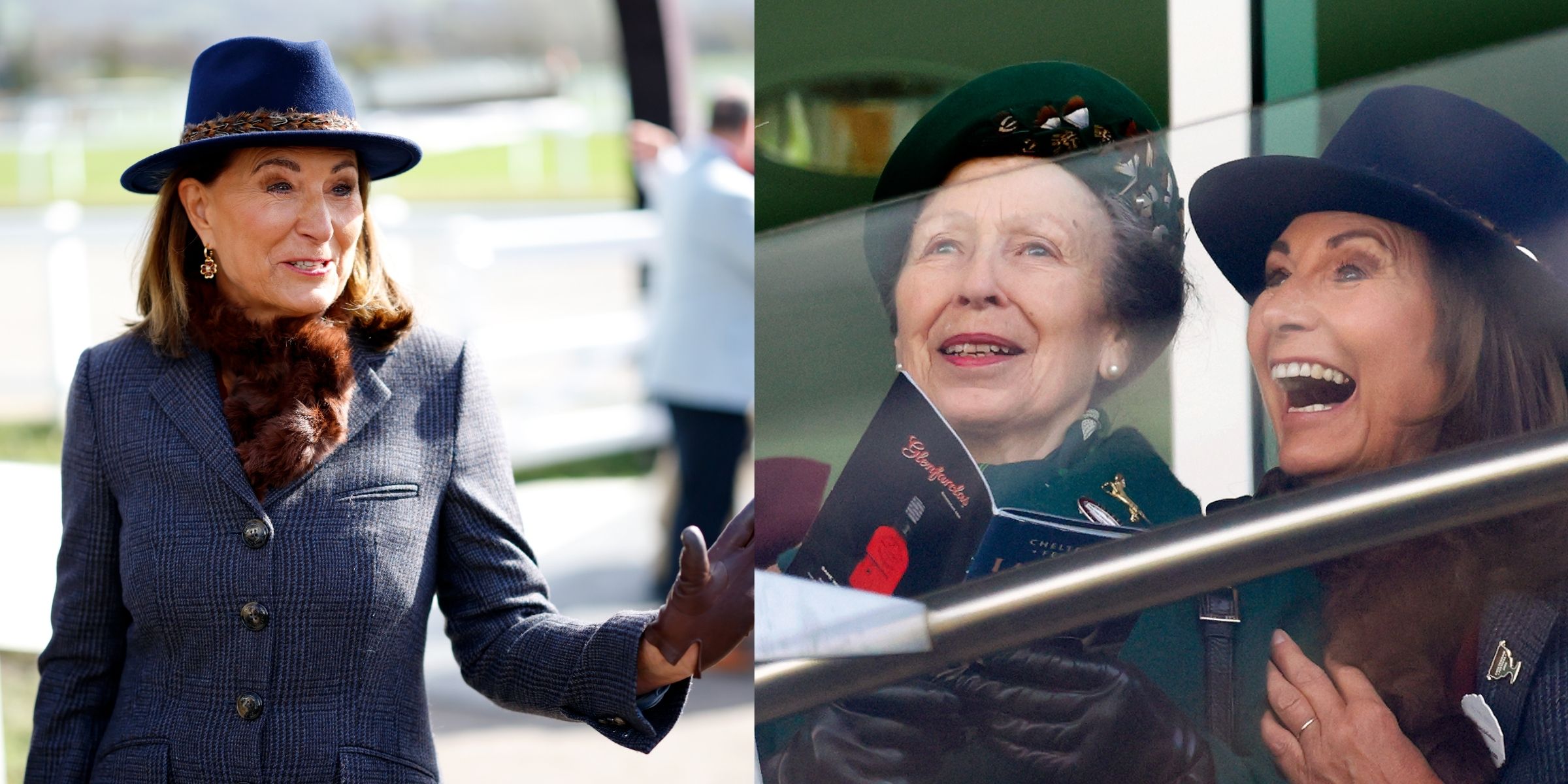

The revelation went far beyond finances. As Kilcher began to investigate what Carroll had told her over the years versus what was actually true, she found the ground beneath her entirely rewritten.
"As I started investigating the truth about what my mum had told me in my life versus what was true, I had realised that pretty much everything I formed my reality on was fiction," she said. Carroll has not publicly responded to the allegations.

Lenedra Carroll (Jewel's Mother) and Jewel pose during an event to promote Jewel's Self Magazine Cover at Joe's Pub on 28 November 2000 in New York City. | Source: Getty Images
Advertisement
Rebuilding, One Thought at a Time
In the years since, Kilcher has spoken candidly about the cumulative weight of what she has endured – and how she has worked to reclaim herself from it.
"The amount of trauma in my life, the amount of neglect, moving out at 15... I had a very scary life," she said. "Learning how to remove myself is how I found safety."

Jewel Kilcher attends THE CINEMA SOCIETY & CALVIN KLEIN host a screening of "WE OWN THE NIGHT" at Chelsea West Theater on 9 October 2007 in New York City. | Source: Getty Images
She has drawn on her own experience to advocate for others in similar circumstances, participating in campaigns around public housing and youth homelessness, and recording the song "No More Tears" for the documentary "Lost in America", which focuses on homeless youth.
Advertisement
Speaking at the 2020 mental health town hall alongside figures including Billy Porter, Demi Moore, and Matthew McConaughey, Kilcher shared the coping strategies that had sustained her during her most frightened period – including the habit of treating thoughts and feelings like passing weather rather than permanent truths.
"Not every thought and feeling's a fact. Just because it's happening in my brain doesn't mean it's the truth," she said.
At 51, Kilcher carries her story not as a wound but as a credential. "Statistically girls like me end up repeating the cycle we were raised by," she told Forbes in 2016. "I did not want to be a statistic."
She was not.
Advertisement
Advertisement

The information in this article is not intended or implied to be a substitute for professional medical advice, diagnosis or treatment. All content, including text, and images contained on news.AmoMama.com, or available through news.AmoMama.com is for general information purposes only. news.AmoMama.com does not take responsibility for any action taken as a result of reading this article. Before undertaking any course of treatment please consult with your healthcare provider.
news.AmoMama.com does not support or promote any kind of violence, self-harm, or abusive behavior. We raise awareness about these issues to help potential victims seek professional counseling and prevent anyone from getting hurt. news.AmoMama.com speaks out against the above mentioned and news.AmoMama.com advocates for a healthy discussion about the instances of violence, abuse, sexual misconduct, animal cruelty, abuse etc. that benefits the victims. We also encourage everyone to report any crime incident they witness as soon as possible.