
How Wiz Khalifa Impressed 'The Kicking Machine' Superlek Kiatmoo9 With His Muay Thai Skills — Video
June 08, 2026



During a podcast appearance, the rapper used lessons from fatherhood, Pittsburgh, and MMA to explain why real masculinity has little to do with fear or bravado.
In 2024, Wiz Khalifa opened up about his views on masculinity during an appearance on the "Jay Shetty Podcast" and discussed everything from fatherhood and competition to martial arts and emotional intelligence, offering his perspective on what real masculinity looks like in practice.

Wiz Khalifa discusses masculinity, fatherhood, and personal growth during an appearance on the "Jay Shetty Podcast" in a video published on December 9, 2024. | Source: YouTube/Jay Shetty Podcast
For Khalifa, real masculinity starts with emotional control. The rapper said the men he respected most were usually "moderate and mild-tempered and just chill." They did not need to dominate a room or scare people to prove a point.
Instead, they observed, guided situations, and carried themselves with calm authority. Khalifa connected that mindset to combat sports, which gave him a place to process emotion without letting it spill into the wrong areas. He shared:
"We all have feelings and we all have emotions, and that's where, like, training in combat sports, it helps you like to put all of that stuff in the right place."

Wiz Khalifa performs during the 2024 Stagecoach Festival at Empire Polo Club on April 28 in Indio, California. | Source: Getty Images
He pushed back against the idea that shouting, yelling, or being rude makes someone masculine. To him, that kind of behavior often shows that a person has not learned how to handle what they feel.
"The more that you can position yourself in life to have an understanding of your own emotions and be in control of your reactions to things, I think that just makes you more looked at as what people would consider masculine or a leader or a provider," Khalifa insisted.

Wiz Khalifa speaks with Jay Shetty during a wide-ranging conversation on family, competition, and emotional intelligence. | Source: YouTube/Jay Shetty Podcast
Khalifa also made a clear distinction between knowing how to defend yourself and using that ability recklessly. Training gave him skills, but it also taught him restraint. He said force should only be used when there is a genuine need to protect himself or his loved ones.
"I would never use what I know to hurt anybody unless it was to protect my family or myself," Khalifa revealed. That boundary mattered to him. Aggression, in his view, should not be used to intimidate people, win arguments, or demonstrate toughness. He added:
"To me, like, that's not cool. That's not tough. That's not even what it's for."

Wiz Khalifa seen before the game between the Chicago White Sox and the Pittsburgh Pirates during interleague play at PNC Park on July 20, 2025, in Pittsburgh, Pennsylvania. | Source: Getty Images
The point was not that men should avoid strength. Rather, Khalifa suggested that strength becomes meaningful only when it is paired with discipline. A person who can hurt others but chooses not to has more control than someone who constantly needs to prove they are dangerous.
The rapper also questioned the idea that the "most mean" or "most scary" person should be seen as the strongest. From what he has seen, the quieter and more balanced people are often the ones who carry the most real presence.

Wiz Khalifa shares his perspective on leadership, self-control, and modern masculinity during the podcast interview. | Source: YouTube/Jay Shetty Podcast
Khalifa's upbringing in Pittsburgh also shaped his view of masculinity. The rapper recalled being around men who projected a hyper-masculine image. They looked tough, acted tough, and built their identity around being feared.
However, that image did not always survive real consequences. Some ended up in jail, and some were shot. Others came home from difficult experiences and were no longer the people they had pretended to be. Khalifa said:
"All of that masculinity kind of goes away when you see the perception of this person go away."

Wiz Khalifa onstage during the "Charlie Puth: Whatever's Clever! World Tour" at the Kia Forum on April 29, 2026, in Inglewood, California. | Source: Getty Images
That taught him to look deeper than reputation. Masculinity built only on image can disappear once the audience does. What remains is character. Khalifa summed up the issue with a direct question: "Who really are you inside without this whole thing that you're, like, putting off on people?"
For him, manhood cannot be reduced to a performance. It has to show up in private choices, public behavior, and the way someone carries themselves when nobody is applauding.

Wiz Khalifa reflects on the lessons he has learned through fatherhood and combat sports while speaking with Jay Shetty. | Source: YouTube/Jay Shetty Podcast
Khalifa also spoke about masculinity through the lens of raising his son. He said boys can become competitive very quickly, especially in sports. He has seen it with his son and his son's friends, who sometimes slip into a mindset of constantly going at each other.

Wiz Khalifa and Sebastian "Bash" Thomaz at a "Sonic The Hedgehog" special screening at the Regency Village Theatre on February 12, 2020, in Westwood, California. | Source: Getty Images
"They're so competitive and they're so at each other's throats," he shared. Still, the rapper tries to teach a different lesson — competition can be healthy, but it should not erase respect.
Instead of tearing each other down, young men should learn how to encourage one another. "You're, like, a better teammate if you tell dudes like, 'Yo, good shot,' like, you know what I'm saying, 'Good job. I see you,'" he said.
Khalifa did not dismiss the fun side of competition. He admitted that talking trash can be part of sports and friendship. However, he drew a line between playful rivalry and a mindset built on stepping over others. He continued:
"At the root of it, y'all still got to be friends and care about each other and take care of each other."

Wiz Khalifa and Jay Shetty sit down for an in-depth discussion on masculinity, relationships, and personal growth. | Source: YouTube/Jay Shetty Podcast
One of Khalifa's clearest examples came from MMA. When Shetty asked what combat sports had taught him, the "See You Again" rapper pointed to a blunt lesson: "Getting punched in the face."
While he acknowledged that the comment sounded extreme, Khalifa still used it to explain composure. In a fight, getting hit does not end the moment. A person still has to breathe, defend, move, think, and continue. He added:
"You learn how to be calm and, like, not get emotional when somebody hits you in the face, and you still got three rounds to do work."
That lesson applies outside the ring, too. Many people talk as though they would explode if someone hit them, but Khalifa sees that kind of reaction as empty bravado. "There's a lot of dudes who's like, 'If somebody punches me in the face, I'll kill him,'" he said.
"But, like, no, you won't. You got to fight back. You got three minutes or you're going to keep getting punched in the face," he continued. For Khalifa, the real test is not what someone threatens to do — it is what they actually do under pressure.
He went on to claim that masculinity has become "so abused" as a word that some people now see it negatively. Still, as a father to a daughter, he believes healthy examples matter. "I have a daughter, so she has to see what a masculine man is like," Khalifa said. "She has to see what a provider is like."
That example, he noted, goes beyond physical strength or money. It includes being protective, caring, and emotionally present. In Wiz Khalifa's view, masculinity is not about fear. It is about control, care, and the ability to stay steady when life tests you.
How Wiz Khalifa Impressed 'The Kicking Machine' Superlek Kiatmoo9 With His Muay Thai Skills — Video
June 08, 2026

Wiz Khalifa Breaks Down His Full Garage Fleet and the Untold Stories Behind Every Car
June 12, 2026

The Unexpected Hobby: Wiz Khalifa's Passion for One Unlikely Sport
July 01, 2026

'We're Gonna Do a Movie': Wiz Khalifa Recalls Snoop Dogg's Immediate Vision for 'Mac & Devin Go to High School'
June 26, 2026

'I Make More Money Every Year': The Financial Habit Wiz Khalifa Thinks Other Rappers Need to Learn
June 30, 2026

What Happened to Wiz Khalifa's $100,000 Rolex During a Show?
June 23, 2026

A Rapper and Tattoo Artist: Who Is Wiz Khalifa's Taylor Gang Friend Who Collaborated on Songs and Tattooed Him?
June 18, 2026

The Story of How 'Black and Yellow' Changed the Way Wiz Khalifa Writes Music
July 02, 2026

'Living There Was Wild': Wiz Khalifa Remembers What Made Him Feel Left Out While Living in Japan as a Kid
June 17, 2026

'Man, I Feel the Same Way': The Friendship Habit Wiz Khalifa and His Fans Have in Common
June 19, 2026
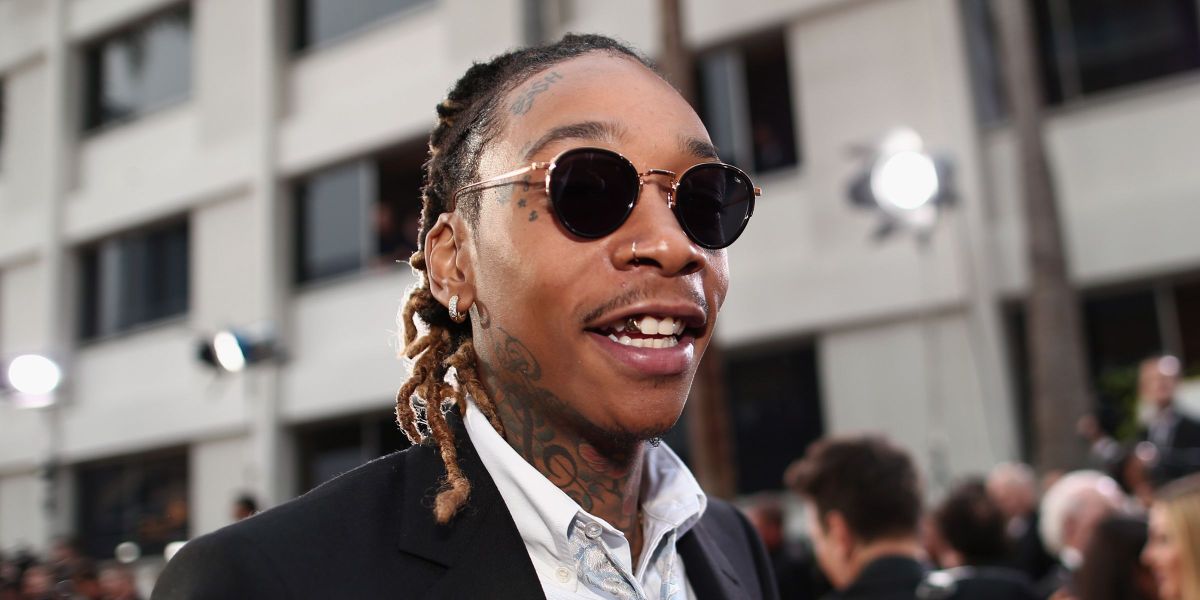
Eyewear Icon: The Real Reason Wiz Khalifa Wears Shades Indoors and 5 Stylish Frames He Has Rocked
June 26, 2026