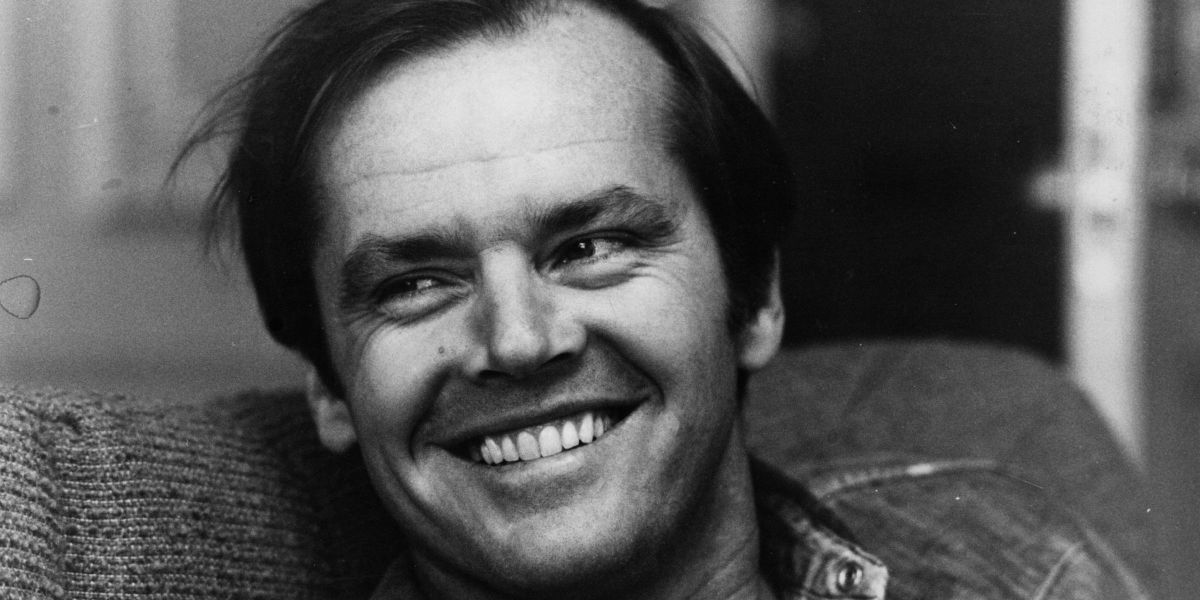
Jack Nicholson | Source: Getty Images
Jack Nicholson Thought His Mom Was His Sister for Nearly 4 Decades – How He Finally Learned the Truth

By
Milla Sigaba
Aug 10, 202608:14 A.M.
By his late 30s, the actor had built a formidable career in Hollywood, but away from the cameras, part of his own story remained hidden from him. The secret had survived his childhood, his move to Los Angeles, and his rise to fame before it finally unraveled.
Advertisement
Long before Jack Nicholson became one of Hollywood's most recognizable actors, his family had made a decision that would shape his understanding of his childhood for decades.

Jack Nicholson backstage at Academy Awards on March 23, 1998, in Los Angeles, California. | Source: Getty Images
The arrangement began before he was born and involved several members of his family maintaining the same story. It was not until Hollywood success brought greater scrutiny to his background that he learned how much had been kept from him.

Jack Nicholson poses for a photoshoot in his hotel room in 1993 in Los Angeles, California. | Source: Getty Images
Advertisement
The Family Secret
The circumstances dated back to 1936, when Jack's biological mother, June, became pregnant at 18. To make matters more complicated, her boyfriend at the time, Don, was married to another woman.
June's mother, Ethel May, responded by ordering Don to stay away from her daughter. She threatened him with the Mann Act — a federal law created to combat trafficking and prostitution involving women and girls — as well.

A high school portrait of Jack Nicholson, circa 1955. | Source: Getty Images
Advertisement
The federal law was also used historically to prosecute some consensual relationships. As for Jack, he was later born in Neptune, New Jersey, in 1937.
However, with June so young, unmarried, and hoping to pursue a career in entertainment, the family concealed the circumstances of his birth. Instead, Ethel May raised Jack as though he were her own son, meaning he grew up believing that she was his mother.

Jack Nicholson photographed for "The Cry Baby Killer," circa 1958. | Source: Getty Images
June, meanwhile, was presented to him as his much older sister, and no one told Jack otherwise. As for the actor's biological father, he was absent from Jack's childhood.
Advertisement
That attention ultimately exposed the secret his family had managed to protect throughout his entire childhood and early adulthood.

Jack Nicholson photographed in Canada on July 25, 1969. | Source: Getty Images
In his place, Shorty, the husband of Jack's aunt Lorraine, became a father figure in the actor's life. And so, the unusual family structure continued even after June left home when Jack was four years old.
She moved to Miami and pursued work as an Earl Carroll showgirl, leaving her biological son to continue growing up without knowing their actual relationship. Years later, their paths would converge again for an entirely different reason.
Advertisement

Jack Nicholson films "Easy Rider," circa 1969. | Source: Getty Images
Jack Followed His 'Sister' to Hollywood
At 17, Jack decided to pursue opportunities in Los Angeles, where June had already moved while trying to establish herself in show business. From his perspective at the time, he was simply following one of the closest relatives he had. He recalled to "Rolling Stone" in 1986:
"And since my only relative in the world was June, who was out here, I came out to look around."

Jack Nicholson and Art Garfunkel film "Carnal Knowledge" in 1971. | Source: Getty Images
Advertisement
Once in California, he found work at MGM Studios as an office boy in the animation department. His personality eventually attracted the attention of a producer, who encouraged him to take acting classes. The move proved consequential.
Jack steadily built a film career, and by the 1970s, his profile had risen dramatically. Yet the more famous he became, the more interest there was in the man behind the performances. That attention ultimately exposed the secret his family had managed to protect throughout his entire childhood and early adulthood.

Jack Nicholson on the set of"Carnal Knowledge" in 1971. | Source: Getty Images
Advertisement
A Magazine Fact-Check Changed Everything
In 1974, Jack was 37 and preparing for the release of "Chinatown" when Time magazine began working on a profile of him. The actor had been remarkably prolific, and the magazine prepared to feature him under the cover line "The Star with the Killer Smile."
Before publication, however, researchers from Time contacted Jack while checking details about his background. What began as routine fact-checking quickly became something far more personal.
Advertisement
According to the account, the Hollywood star was first told that the man identified as his father was still alive and living in Ocean Grove, New Jersey. Then came the revelation that fundamentally changed what he understood about his family.
It would come to light that Ethel May, whom he had believed was his mother, was actually his grandmother, while June, whom he had known as his sister, was his biological mother.
Advertisement
Jack asked the magazine not to include the discoveries in its story. He then turned to the people who could tell him whether what he had just heard was true.
According to Patrick McGilligan's biography "Jack's Life," the "As Good as It Gets" star called Shorty and said to him, "Shorty, this is the most [expletive] thing I've ever heard." He then relayed what the magazine had told him:
"A guy calls me on the phone, and says that my father is still alive, and that Ethel May wasn't really my mother — that June was my mother."

Jack Nicholson attends the 38th annual Directors Guild of America Awards on March 8, 1986, in Beverly Hills, California. | Source: Getty Images
Advertisement
Shorty initially denied the story before eventually passing the telephone to Lorraine. She confirmed that Ethel May had indeed been Jack's grandmother and June his mother.
One question, however, remained unresolved. Lorraine could not confirm whether Don Furcillo-Rose, the man reportedly living in New Jersey, was actually Jack's biological father.

Jack Nicholson photographed in Paris, France, on September 10, 1990. | Source: Getty Images
He Could No Longer Ask His Mother or Grandmother
For Jack, there was also no longer any opportunity to ask the two women at the center of the secret why they had maintained it for so long. Both June and Ethel May had died before he learned the truth, leaving him unable to confront either woman or hear their explanations firsthand.
Advertisement
The revelation nevertheless affected him as he continued working. The actor subsequently made "The Fortune," and after learning about his family history, he asked director Mike Nichols to keep a close watch on him during the production.

Jack Nicholson attends the 19th annual American Film Institute Lifetime Achievement Awards Honoring Kirk Douglas on March 7, 1991, in Beverly Hills, California. | Source: Getty Images
Although the discovery initially sent him reeling, Jack later distinguished between his initial reaction to the revelation and its lasting effect on him. Over time, his reaction also included a degree of amazement, as he revealed:
"I was very impressed by their ability to keep the secret, if nothing else. It's done great things for me."
Advertisement

Jack Nicholson holds up his Oscar after winning the Best Actor in a Leading Role Category during the 70th Academy Awards at the Shrine Auditorium on March 23, 1998. | Source: Getty Images
Jack Nicholson occasionally referred to June as his "sister-mother" when discussing the unusual circumstances in later years, but he largely refrained from speaking extensively about the subject.
Thus, what he had believed for almost four decades had begun as a decision made before he was even born. And by the time he discovered the truth, both women who could have explained that decision in their own words were already gone.
Advertisement
Advertisement