
Hip-hop Health: 3 Rappers Wiz Khalifa Admires For Taking 'Their Physique Serious' and Their Workout Routines
June 12, 2026


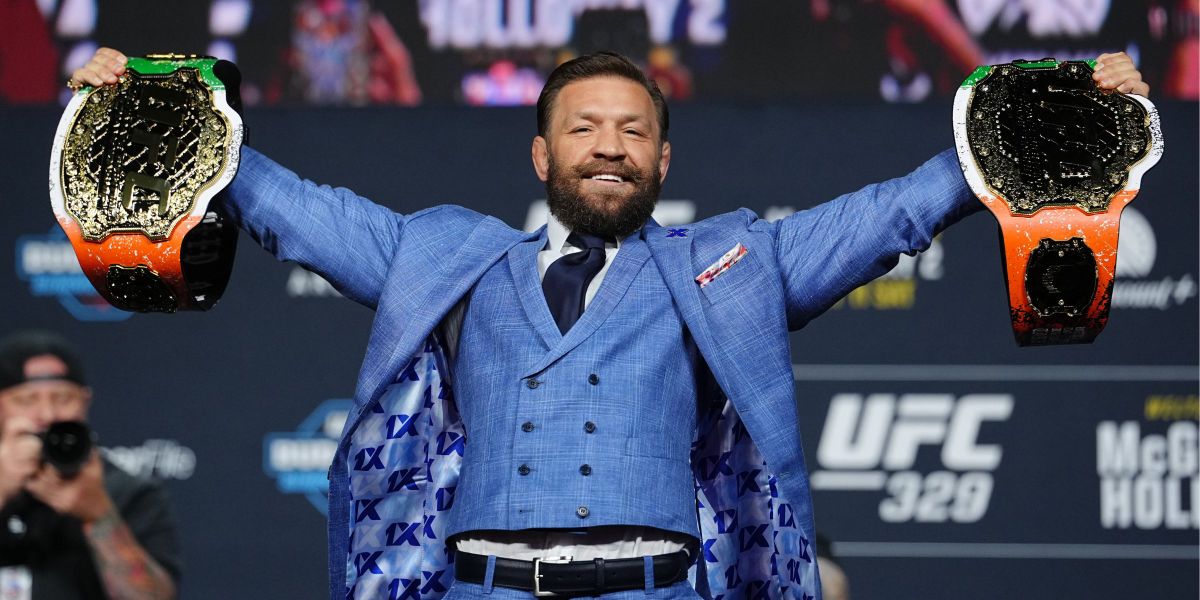

Over the years, his changing physique has become one of the sport's biggest talking points. The before-and-after photos at the end of this article reveal just how dramatically his body has changed over time.
Conor McGregor built his reputation as one of the UFC's most dominant featherweights, but the body that carried him to championship success looked vastly different from the one fans have seen in recent years.
When he ruled the featherweight division, making the 145-pound limit required an intense weight-cutting process that left him looking almost unrecognizable compared to his everyday appearance.
Before his title defense at UFC 194 in December 2015, the former champion appeared gaunt during weigh-ins, with a noticeably lean frame, hollow cheeks, and far less muscle definition than fans would later associate with him.
That contrast became even more apparent after he moved away from featherweight. In 2016, as his rivalry with Nate Diaz unfolded at welterweight, McGregor no longer needed to strip his body down to reach 145 pounds.
Instead, his most dramatic transformation arrived several years later following the serious leg injury he suffered during his trilogy bout with Dustin Poirier in July 2021.
Rather, he competed at 170 pounds, much closer to his natural size, allowing him to enter fight week looking healthier, fuller, and considerably more muscular.
Away from the dehydration and physical toll of making championship weight, his face appeared fuller, his upper body looked stronger, and his overall physique reflected an athlete no longer forced into one of the sport's most punishing weight reductions.
Even so, observers also noted subtle differences between his two welterweight appearances in 2016. Ahead of the rematch with Diaz at UFC 202, McGregor appeared slightly leaner than he had been before their first meeting at UFC 196.
The adjustment came after he attributed his first loss to Diaz in part to conditioning, suggesting he had refined his preparation while still competing above his former featherweight division.
Although the move to 170 pounds showcased a healthier-looking version of McGregor, questions soon emerged about where he truly belonged.
With featherweight behind him and welterweight not viewed as his long-term home, attention shifted toward whether he would ever attempt another cut to 145 pounds. However, as his career progressed, that possibility gradually faded.
Instead, his most dramatic transformation arrived several years later following the serious leg injury he suffered during his trilogy bout with Dustin Poirier in July 2021.
His larger frame fueled widespread speculation about whether he would ever return to the lighter divisions that had defined the early years of his UFC run.
Sidelined while recovering from surgery, McGregor documented much of his rehabilitation on social media, where fans quickly noticed that his physique had changed once again.
By December 2021, he revealed that he had bulked up to approximately 190 pounds, a significant increase from the weight at which he had previously competed inside the Octagon.
While UFC fighters often weigh considerably more outside of competition than they do at official weigh-ins because of the dehydration used to make their divisions, McGregor's increase still stood out.
Reports at the time attributed the transformation to a structured approach centered on hypertrophy-focused workouts, heavy resistance training, and a carefully planned nutrition program consisting of six measured meals each day that balanced carbohydrates, protein, and fats.
The combination allowed him to add substantial muscle while recovering from one of the most serious injuries of his career. His larger frame fueled widespread speculation about whether he would ever return to the lighter divisions that had defined the early years of his UFC run.
Instead, each public appearance reinforced the image of an athlete whose body had evolved well beyond his championship-winning featherweight days. That evolution remained evident in July 2026 as McGregor prepared for his UFC 329 main event against Max Holloway.
He officially weighed in at 170.5 pounds, while Holloway came in at 170 pounds. Although the numbers on the scale were nearly identical, the visual comparison generated immediate attention.
Despite standing two inches shorter than Holloway at 5-foot-9, McGregor appeared considerably more muscular during the ceremonial weigh-ins.
Former UFC fighter Chael Sonnen also remarked on the Irish star's noticeably larger physique during an interview with journalist Ariel Helwani, sharing:
"I saw Conor yesterday...this guy's huge. First off, he's as hard as a rock, and secondly, I'm looking at him, and I said, 'Conor, I fought middleweights my whole life. I didn't fight anybody smaller than you.'"
From an emaciated-looking featherweight enduring one of mixed martial arts' most demanding weight cuts to a heavily muscled athlete who once reached 190 pounds during rehabilitation, Conor McGregor's body has transformed alongside his career.
Each phase reflected a different chapter, whether chasing championship gold at 145 pounds, competing against larger opponents at welterweight, or rebuilding himself after a career-threatening injury. Scroll down to see the before-and-after photos documenting his remarkable physical transformation.

Conor McGregor flexes during the UFC weigh-ins at Stockholm's Ericsson Globe Arena on April 5, 2013. Early in his UFC career, the future two-division champion competed as a featherweight, with his lean, highly defined physique reflecting the demanding weight cuts that became a hallmark of his rise through the division.

Conor McGregor poses on the scales during the UFC Fight Night Boston weigh-ins at the Orpheum Theatre on January 17, 2015. Still competing as a featherweight, the Irish star displayed the lean, shredded physique that helped define his early UFC success, with every muscle standing out after another demanding weight cut.

McGregor strikes another pose moments later during the same weigh-in event in Boston. Viewed from a different angle, his slender frame and pronounced muscle definition underscored the physical demands of competing at 145 pounds before later moves to heavier weight classes transformed his appearance.

Conor McGregor celebrates on the scales during the UFC 196 weigh-ins at the MGM Grand Garden Arena in Las Vegas on March 4, 2016. Preparing to face Nate Diaz at 170 pounds, the former featherweight champion appeared noticeably fuller than he had during his days at 145 pounds, reflecting the absence of a severe weight cut.

McGregor acknowledges the crowd after stepping off the scales ahead of UFC 196. Competing closer to his natural size gave the Irish fighter a healthier, more muscular appearance, marking the beginning of a new chapter as he tested himself against larger opponents.

Conor McGregor flexes during the UFC 264 weigh-ins at T-Mobile Arena in Las Vegas on July 9, 2021. After years of competing in multiple weight classes, the Irish fighter appeared significantly more muscular than during his featherweight days, showcasing the larger frame that had become a defining feature of the later stages of his career.

Conor McGregor is seen in Los Angeles on August 5, 2021, less than a month after suffering a broken leg during UFC 264. Although wearing a protective walking boot as he continued his recovery, the former UFC champion's noticeably broader arms and upper body hinted at the dramatic muscle gain that would become even more apparent in the months that followed.

Conor McGregor stands inside the Octagon before his welterweight bout against Max Holloway at UFC 329 at T-Mobile Arena in Las Vegas on July 11, 2026. Years after his dramatic featherweight weight cuts, the Irish fighter looked considerably bigger and more muscular at 170 pounds, underscoring one of the most striking physical transformations of his UFC career.
Hip-hop Health: 3 Rappers Wiz Khalifa Admires For Taking 'Their Physique Serious' and Their Workout Routines
June 12, 2026

Tiger Woods, 50, Stuns With Vanessa Trump At Golf Finals Ahead Of Comeback, Igniting Buzz
March 26, 2026

On The Road: Inside Wiz Khalifa's Secret Routine for Staying Motivated and Eating Healthy On Tour
June 10, 2026

Beverley Callard, 69, Stuns Fans With Truth about Her 'I Am Celebrity' Exit – Video
April 23, 2026

Melania Trump, 56, Steps Out at UFC Freedom 250 in an Edgy Leather Look — And the Photos Have Everyone Talking About More than the Outfit
June 16, 2026
Stars Who Showed Up to Donald Trump's UFC Birthday Night at the White House — and the A-Listers Who Quietly Said No — Photos
June 16, 2026

'The One Show' Viewers Divided Over Sheridan Smith, 44, as Her New Look After Weight Loss Sparks Buzz — Before-and-After Photos
April 17, 2026

'I'm A Celeb' Star Beverley Callard, 69, Forced to Withdraw from Final on Medical Advice – Video
April 24, 2026

Inside the 'Alaskan Bush People' Family's Complicated History
June 01, 2026

Kelly Clarkson Celebrates 44th Birthday as Her Transformation from 203 Lbs Turns Heads – Photos
April 24, 2026

How Wiz Khalifa's Workout Reels Sparked Bootleg Kev's 25-Pound Transformation
June 15, 2026