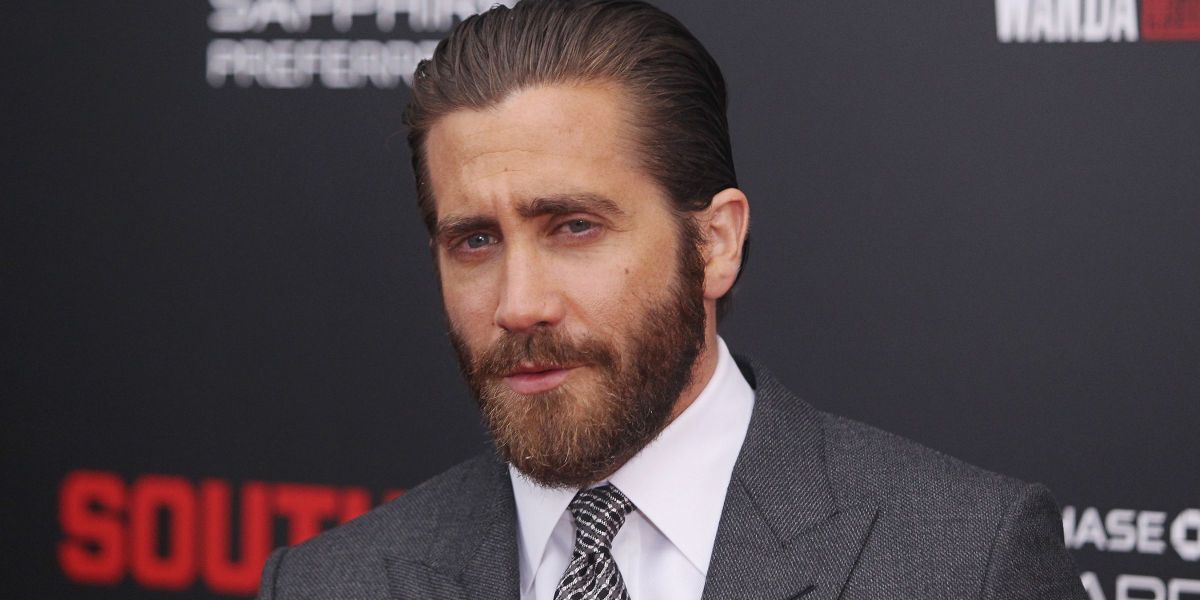
Jake Gyllenhaal | Source: Getty Images
'You Feel Like an Animal': Inside Jake Gyllenhaal's Grueling 'Southpaw' Workout and Before-and-After Photos

By
Milla Sigaba
Jul 17, 202604:25 A.M.
Under director Antoine Fuqua's guidance, the actor followed a punishing training schedule to portray a world-class fighter. Scroll to the end to see his dramatic before-and-after transformation photos.
Advertisement
Jake Gyllenhaal took on one of the most physically demanding roles of his career when he starred as boxer Billy Hope in the 2015 sports drama "Southpaw."
The film follows the rise, fall, and attempted comeback of a once-dominant champion, requiring its lead actor to look and move like someone who had spent years inside the ring.
To make that happen, Gyllenhaal committed to months of intensive preparation that transformed both his physique and his approach to the role.
However, the transformation attracted widespread attention long before the movie reached theaters. Audiences had become familiar with the actor through leaner roles in films such as "Donnie Darko," "Bubble Boy," and "Brokeback Mountain."
Although he had portrayed physically demanding characters before, including a police officer in "End of Watch," stepping into the shoes of a championship boxer required an entirely different level of conditioning.
The contrast became even more striking after "Nightcrawler," for which Gyllenhaal had deliberately lost about 30 pounds to portray the gaunt, obsessive Lou Bloom.
Advertisement
Months later, he reappeared with a dramatically more muscular frame for "Southpaw," leaving many wondering how he had achieved such a remarkable transformation.
1. Training Like a Professional Boxer
"Southpaw" director Antoine Fuqua believed there was only one way to prepare for the role: Gyllenhaal had to live like a fighter before he could convincingly play one.
In a promotional feature released ahead of the film's debut, Fuqua explained that his instructions were straightforward. If the actor wanted to perform like a boxer, he first had to train as one. That meant two training sessions every day of the week, including Sundays, with no shortcuts.
To ensure the preparation matched the demands of the sport, Fuqua enlisted respected boxing coach Terry Claybon of LB4LB Boxing Gym in Los Angeles. Claybon oversaw every aspect of Gyllenhaal's boxing development, focusing on both technique and conditioning.
Fuqua also refused to leave his star to tackle the demanding schedule alone. Knowing how physically exhausting the process would become, the director trained alongside him.
Advertisement
Their days often began with workouts at 4:30 a.m. before returning for another session later in the afternoon, creating a routine that closely mirrored the discipline expected of professional fighters.
The relentless schedule eventually affected more than just Gyllenhaal's body. During a 2015 interview while promoting the film, he reflected on the mental shift that came with months of training.
"I mean, I think you just start to [...] believe your own hype," he said. "'Cause you get positive and you kind of — you believe yourself to be, like, a fighter in a way once you're in there and you're sparring and, you know, you're in that type of shape."
He added that the experience produced a level of confidence unlike anything he had experienced before, noting, "It breeds a kind of confidence [...] beyond normal self-confidence. You feel like an animal."
2. Endless Cardio and Conditioning
The physical transformation did not happen through weightlifting alone. By the end of his preparation, Gyllenhaal had reportedly added around 18 pounds while maintaining the conditioning needed to portray an elite boxer throughout demanding fight sequences.
Advertisement
His mornings began with an already exhausting routine before the day's formal boxing sessions even started. Each day reportedly included 1,000 sit-ups and an eight-mile run, creating an intense foundation for everything that followed.
From there, Claybon incorporated additional conditioning exercises designed to improve endurance and explosiveness. 15 minutes of high-intensity jump rope work became a regular part of the program, helping sharpen coordination while building cardiovascular fitness.
The workload continued with another round of core exercises, along with more than 100 pull-ups, push-ups, and tricep dips. Medicine ball drills were also heavily featured to improve rotational power, balance, and overall athleticism, all of which are essential inside the ring.
3. Mastering the Fundamentals of Boxing
Building muscle was only part of the challenge. Gyllenhaal also needed to move like someone who had spent years competing professionally, making footwork one of the first priorities.
Advertisement
Training sessions regularly included multiple rounds devoted entirely to movement, defensive positioning, and learning how to navigate the ring efficiently. While some sessions lasted the equivalent of three rounds, others extended for hours depending on the day's objectives.
Once those drills were complete, the focus shifted to shadowboxing. Over six rounds, Gyllenhaal practiced combinations, forward movement, punch mechanics, and defensive reactions until the techniques became second nature.
Heavy bag work and speed bag drills rounded out the boxing sessions. These drills helped improve accuracy, timing, rhythm, and defensive awareness while reinforcing the offensive combinations needed for the film's fight choreography.
4. The 250-Pound Tractor Tire
Among the most recognizable parts of Gyllenhaal's training routine was his work with a 250-pound tractor tire. Tire flips became a daily staple, with the actor reportedly completing around 20 repetitions during workouts.
Advertisement
The exercise demanded full-body strength, explosive power, and endurance, making it a valuable complement to his boxing preparation.
Once the tire flips were complete, he often picked up a sledgehammer and repeatedly struck the tire, adding another physically demanding conditioning exercise that challenged his shoulders, core, grip strength, and cardiovascular endurance.
5. Fueling the Transformation
Such an intense training schedule required an equally disciplined approach to nutrition. Gyllenhaal credited his diet as a major factor behind the physique he achieved for "Southpaw."
Rather than relying on a handful of large meals, he reportedly ate six or seven times each day, spacing meals roughly every three hours. His nutritional approach supported the rhythm of his training.
Carbohydrates featured more prominently earlier in the day to provide energy for lengthy workouts, while protein intake increased later in the afternoon and evening to support muscle recovery and growth after hours of boxing and strength training.
Advertisement
A Transformation That Extended Beyond Appearance
Although Jake Gyllenhaal's muscular physique generated headlines before "Southpaw" premiered, the preparation went far beyond changing his appearance.
Months of twice-daily training, countless rounds of boxing drills, demanding conditioning sessions, and a carefully structured diet allowed him to portray Billy Hope with the movement, stamina, and confidence expected of a championship fighter.
The results of that demanding regimen were impossible to miss. Scroll below to see before-and-after photos documenting the actor's remarkable physical transformation for the role.
Before

Jake Gyllenhaal showed off his lean physique as Dustin Hoffman playfully lifted his shirt while Susan Sarandon looked on during the Motorola "Moonlight Mile" Party at the 2002 Toronto International Film Festival on September 9. More than a decade before "Southpaw," the actor had yet to undergo the dramatic physical transformation that would redefine his appearance.
Advertisement

Jake Gyllenhaal was photographed during an outing in Los Angeles on July 29, 2006, showing the naturally lean frame audiences had come to associate with many of his early film roles. Nearly a decade before "Southpaw," the actor had yet to undergo the dramatic physical transformation that would see him pack on muscle to portray champion boxer Billy Hope.
Advertisement
After

Jake Gyllenhaal displayed the powerful physique he built for "Southpaw" in a video released on March 27, 2015, capturing the actor fully immersed in his role as champion boxer Billy Hope. Months of relentless boxing drills, strength training, and conditioning transformed his once-lean frame into that of a convincing prizefighter. | Source: YouTube/Rotten Tomatoes Trailers
Advertisement

Jake Gyllenhaal's remarkable physical transformation was on full display during an intense boxing scene from "Southpaw," highlighting the muscular build he developed through months of rigorous training and strict discipline. His dedication helped bring the grit, endurance, and presence of champion boxer Billy Hope to the screen. | Source: YouTube/Rotten Tomatoes Trailers

Jake Gyllenhaal showcased the muscular physique he developed for "Southpaw" in a video released on June 5, 2015, as his character traded punches during one of the film's hard-hitting fight sequences. Countless hours of boxing drills, conditioning, and strength training helped transform the actor into the believable champion Billy Hope. | Source: YouTube/Rotten Tomatoes Trailers
Advertisement

Jake Gyllenhaal's dramatic physical transformation was evident as he trained inside the boxing gym in "Southpaw," reflecting the months of relentless preparation that went into portraying Billy Hope. The actor's dedication to boxing, strength work, and conditioning gave him the physique and presence of a seasoned prizefighter. | Source: YouTube/Rotten Tomatoes Trailers
Advertisement
Advertisement